The courts have a duty to pursue and uphold the truth. This page is long because I have broken down their misalignment into independent nodes: the forks where they departed from their lawful duties and obligations. You do not have to read all of it. The top tells the story in a few minutes, and every card below stands on its own. Jump to the one issue or the cards.
There are some things worth fighting for. The truth and your children may be the top two. This fight is where those two meet.
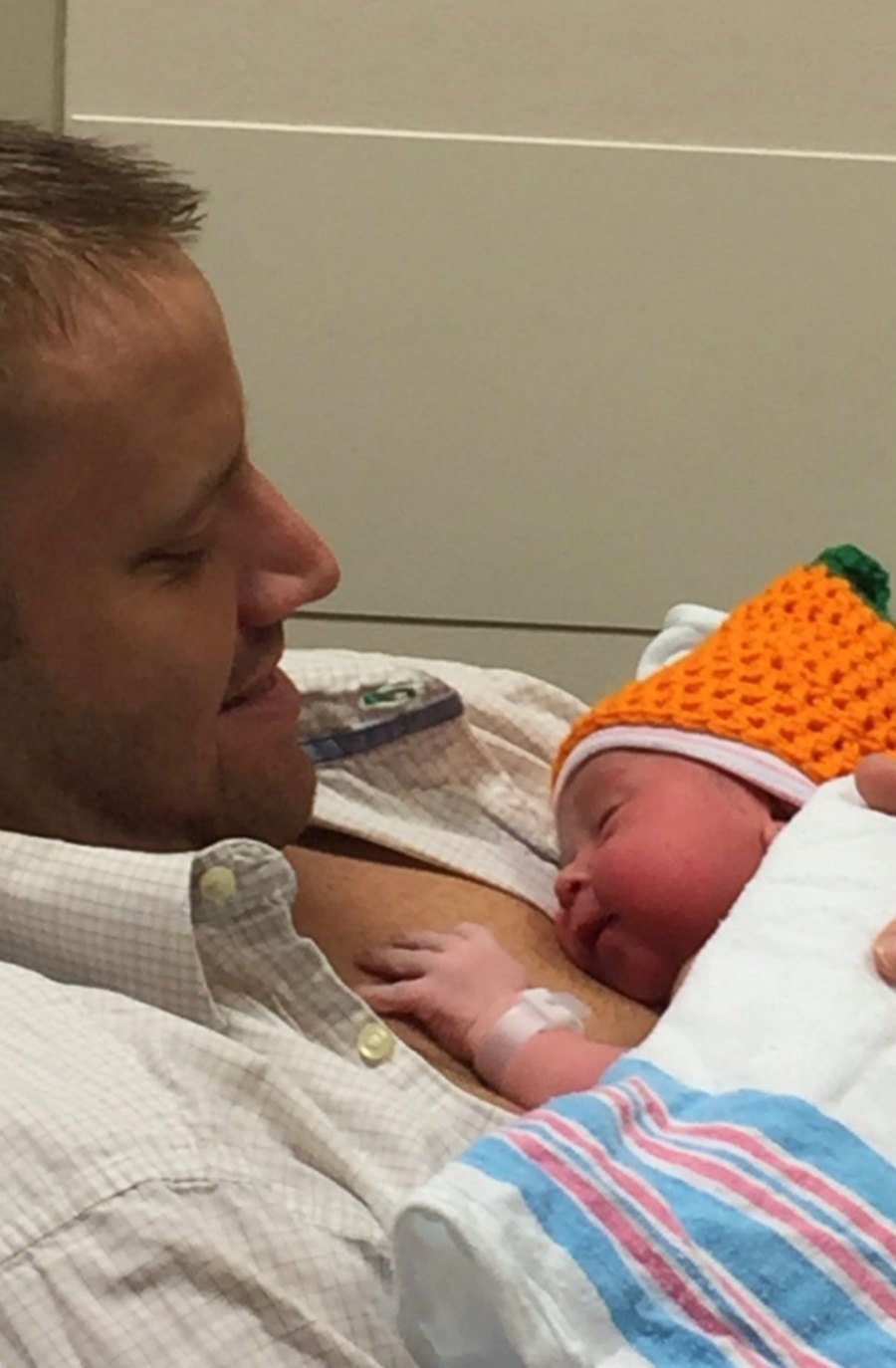
I was terrified of all the changes that came with being a dad and everything I’d have to give up. Seconds after she was born, one of the wonderful nurses had me unbutton my shirt and take my baby girl. I knew immediately I’d sacrifice everything for her. Doing right by her became the concern, and that requires the truth.
The issue is simple: discovery into marital assets that were concealed during and after the marriage. One request for Wife’s bank statements has gone unanswered for 875 days. What should have taken weeks became a massive discovery violation, held in place by the opposing party, multiple courts and other Florida institutions, and buried in process.
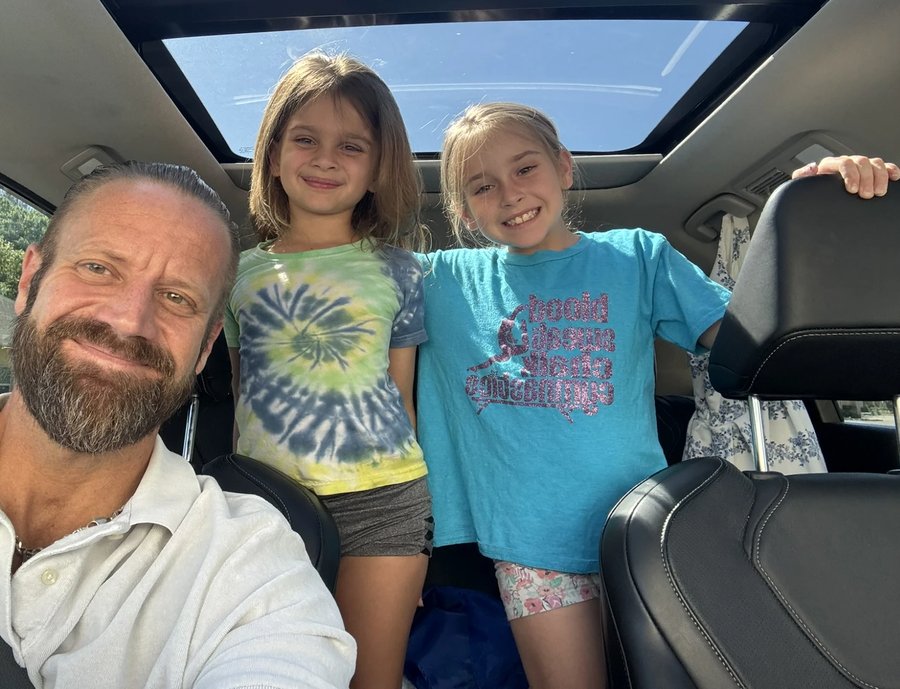
Through all of the unnecessary expense, stress and conflict, my daughters and I have kept a pristine relationship.
Part 1
The problem: a system that stopped aiming at the truth to focus on avoiding accountability for insiders, even when children are the leverage
Your rights are subject to the whims of sometimes compromised attorneys and judges who act as though the truth is not a restraining factor for them. A trial is where a claim meets evidence, under oath, in the open. In 1962, 11.5 percent of federal civil cases got one. In 2002, 1.8 percent. In 2024, half of one percent. A system that almost never tests the truth does not have to deny a request. It only has to leave it sitting.
And the legal industry regulates itself. Lawyers answer to the Bar, which is lawyers. Judges answer to a commission whose files stay confidential unless it chooses to act. When I took the documented facts to the court, the Bar and that commission, each one said the matter belonged to one of the others.
Here is what that looks like in my own case. On August 4, 2026, Wife asked the court to cut my time with my daughters to "visitation only every other weekend" as a contempt sanction. The order she sought to enforce required me to pay $3,000 toward the retainer of a guardian ad litem, a court-appointed investigator for the children. The court has made no finding of harm to either child. Its June 25 order found only that a guardian would be in the children's "best interest" to "investigate the issues." On September 1, Wife told the appellate court reviewing the guardian order that "no investigation has occurred." On July 7, Judge Matthew Felix said of my request for her bank statements, which he had granted in part from the bench in April, "I need a written order on that." I filed a proposed order on July 22 and a notice on July 29 that the request was still pending. No written order has issued since.
God put me in a position where the fight I encountered on behalf of my children was something my entire career had prepared me for: litigating cases. Nineteen years as a Florida trial lawyer, thousands of files, never disciplined.
I called it a perfect storm: brazen misconduct aimed at an experienced litigator and his children, who had one objective, clean hands, and the training, and now the tools, to log every decision against the rule that governed it.
It started with the opposing party. Wife would not produce her bank statements without a court order, and her lawyer objected to every subpoena for them.
Then the bench. Judge Kelly Ayers blocked the bank subpoenas, then offered courthouse video to prove her own conduct and refused to get it. Judge Felix granted my request in part from the bench 701 days after it was filed and has never put it in writing, while presiding as a named defendant in my lawsuit against the court.
Then everyone who was supposed to check them. Court administration confirmed the video exists and held it for 403 days, until a judge from outside the circuit found good cause to release it. The Florida Bar closed my sworn complaint in six days without asking Wife’s lawyer to respond, then destroyed the records of how it handled it after I sued to get them. The Judicial Qualifications Commission closed its file in one page. The Attorney General’s office became the judges’ lawyer. One request for bank statements has grown into three more circuit court cases and six appeals. That is the battleground: process that keeps moving while the question never gets answered.
The retaliation: bury me in process, then make it about the children
When I kept asking for the records, the process turned on me. On December 13, 2024, the day my own lawyer withdrew, Wife’s lawyer filed four motions in one day, including a guardian ad litem over my children and a psychological evaluation of me. Seven weeks later he moved for a vocational evaluation. I offered to sit for both evaluations without being ordered to. His answer in court: "We haven’t taken him up on these things, because we want a guardian ad litem appointed." Asked again and again to name a single concern about the children, he named none. The guardian motion’s only allegations about me are quotations from my own request for the records, one of them cut off just before the words that explain why.
Then a Bar complaint. Judge Ayers, after she was disqualified from my case, filed one against me over my public posts. As of August 10, 2026, 259 days in, it still had not identified a single statement as false.
Then the one thing I had tried to keep out of it. My May of 2024 filing said, "The last thing Respondent wanted to do was to make this ugly and spend money on lawyers that could be spent on or saved for the children ... He has gone to great lengths of which he is very proud to put the children first." The guardian was ordered June 25, 2026, with no finding that either parent is unfit. A second order, entered July 23 and amended August 4, required me to pay $3,000, half the guardian's retainer, within three days. On August 4, Wife moved for contempt and asked the court to cut my time with my daughters to every other weekend as "an appropriate sanction." That is the tactic: make it about the children.
Part 5
Why you haven’t heard about this
In February 2025 a Tampa Bay Times staff writer wrote me, "We definitely want to do what we can to look into this situation as soon as we can," while warning that "given our small staff, that process doesn’t always happen immediately." A week later he wrote, "It’s not something we can jump on at this point given our staffing and story load," and asked me to "keep us posted on any developments." I did, and twice asked for an explanation. No one at the paper has answered since.
In January 2026 a Miami Herald investigative reporter asked me for my summary of the case. My tip to the paper had already said the story was in Tampa. Two days later she wrote that it was "more of a story for a Tampa area news outlet." When I pointed that out, she answered: "I’m interested in Florida Bar currently, which is why I asked for more information. This case is complicated and Tampa-based, so I can’t invest the time it would take." The summary she asked for has a whole section on the Florida Bar.
The University of Florida houses the state’s freedom-of-information project. When I asked UF for its records about my case, it closed the request four and a half hours after its own IT office wrote that the search had stalled and seventeen messages "should have been included previously."
What I am trying to do is simple: get a fair result and get the records. But as I encountered misalignment after misalignment, I decided to document the corruption one building block at a time. I know without any doubt that I will prevail for one simple reason: the truth.
It starts with a single deviation: one order that never issues, one letter that answers a different question. A corrupt system is nothing more than one with multiple misalignments in the same direction. That is what these facts reveal, one decision at a time.
Every fact on this page comes from a filed document. If what you read here bothers you, tell the people whose job it is to act. Each button opens an official form.
Nothing here asks anyone to contact a judge, a witness, or opposing counsel directly, and no one should.
The method
Interpretable justice: measuring a court against its own rules
Lawfare is what legal process becomes when it wears a person down and leaves the question in front of the court undecided. It is hard to see from the outside, because every step looks like ordinary procedure. It becomes visible when you measure each step against the duty that governed it.
Canon 3B(8) of Florida's Code of Judicial Conduct: "A judge shall dispose of all judicial matters promptly, efficiently, and fairly."
Every public institution runs on written duties like that one. Write the duty down, set the institution's actual output beside it, and the distance between the two can be seen, dated and measured. That is interpretable justice. AI researchers call the same idea interpretability: checking whether a system's outputs line up with what it was built to do.
The usual alternative is a cloud: allegations of corruption, denials, and chaos, where no one can tell what is true and the institution ends up serving no one. Interpretable justice replaces the cloud with a record. Each decision gets the same test, so the results can be counted, compared and analyzed statistically, one decision at a time, by anyone.
When alignment can be measured, accountability becomes the normal result.
The study
Why this case works as a study: one variable
On May 16, 2024, in a Florida divorce, Husband asked the court to order Wife's bank statements (Doc. 22). It is one discovery request. That gives this case a single variable: what the court does with that one request.
In Husband's view, everything that followed has been obstruction and retaliation directed at that one request. The day count is the test.
875days since Doc. 22 was filed, with no written order (as of October 8, 2026)
701days before the judge ruled on it at all, from the bench, April 17, 2026
3days from Wife's contempt motion (Aug. 4, 2026) to the order setting it for hearing
The duty
What this court did
Rule 2.215(g)(1): "Every judge has a duty to enter within a reasonable time an order or judgment on every matter submitted to that judge."
Judge Matthew Felix granted Doc. 22 in part from the bench on April 17, 2026, 701 days after it was filed. He has never put that ruling in writing, including after Husband served him the rule's formal Notice of Pending Matter on July 29, 2026.
Rule 2.545(b): "The trial judge shall take charge of all cases at an early stage in the litigation and shall control the progress of the case thereafter until the case is determined."
The motions against Husband moved: a guardian ad litem motion, granted June 25, 2026, followed by an order requiring him to pay $3,000, half the guardian's retainer, within three days; a contempt motion asking the court to cut him to every other weekend, set for hearing by an order entered three days after it was filed and later continued at Husband's request.
One request has waited 875 days while enforcement, a guardian ad litem and contempt moved forward. That is lawfare, measured: process that keeps moving against a parent while the question he asked goes unanswered.
Every card below takes one decision from this record and measures it the same way.
The one issue
On May 16, 2024, Husband asked the court to order one thing: Wife's account statements for the seven and a half years of their marriage. He offered every statement of his own for the same years; Wife would not produce hers without a court order. 875 days later, no written order exists. Wife's pending motion now asks the court to make her "primary custodian" and cut Husband to "visitation only every other weekend." The Second District has held: "A court cannot modify timesharing as a sanction for a parent's contempt of a custody order." Duncan v. Brickman, 233 So. 3d 477, 480 (Fla. 2d DCA 2017).
For those years Wife kept her income in her own account, while the household ran on accounts Husband funded: from November 2016 he funded the joint account she spent from, and she never contributed to it. Custody was settled. The parents lived in separate homes, Wife had applied for a mortgage on her own house, and they shared the children equally.
Wife's lawyer, Scott Davis, kept the records concealed. Wife certified under oath that no loan application existed, then produced one nine days later; her mandatory disclosure came 116 days late. Asked again and again to name any concern about the children, Davis named none, then filed four motions against Husband in a single day. The guardian ad litem motion's only allegations about Husband are quotations of his own filing, one of them cut off just before the words "but primarily in hopes that Petitioner would simply provide the requested bank statements."
Judge Kelly Ayers blocked the bank subpoenas. She ruled they "shall not be issued" because the parties had entered into their agreements, and declined to rule on those agreements because their validity "has not been challenged by either Party," fourteen days after Husband's answer challenged them, then said on the record: "I haven't read the PMA because nobody has challenged it." Her successor, Judge Matthew Felix, ruling on that motion from the bench on April 17, 2026, ordered three years of disclosure and has never put that ruling in writing.
The dispute that request started has run through three more circuit court cases and six appellate cases.
The 31 cards below are the short version of that record: one decision each, by institution, measured against the law that governed it, with the document behind every line. The cases: the Thirteenth Circuit records case (25-CA-010255), the Florida Bar records case in Leon County (2025-CA-2469), the University of Florida records case in Alachua County (01-2026-CA-001794), and appellate cases 2D2025-0681, 2D2025-1936, 2D2026-0279, 2D2026-1955, 2D2026-2213 and 1D2026-0728. These 31 entries are drawn from 227 nodes identified in the record to date; the remaining 196 are still under analysis.
Each card reads the same way. D, the deviation: what the institution did, in one sentence. E, the expected output: what a competent, good-faith actor does under the rule. V, the verified facts and law: dated receipts in the institution's own words, with the documents named. I, the independent encounter: names each actor and the node or fork in the record that gave that actor an independent and identifiable opportunity to realign with the expected output, or to deviate from it again, so that each entry can be checked by itself. L, the law: the law, legal doctrine, or lawful authority that creates the duty and the expected output, constitution first, then the rule, and who carries the burden. The fold under each card holds the older long-form card, its receipts and related cards. Husband and Wife are the two spouses in one Florida divorce. Card numbers such as N-031 open the full card on the map.
D.E.V.I.L. misalignment analysis: Deviation · Expected output · Verified facts and law · Independent encounter · Law
D
Deviation
Judge Ayers let Husband's lawyer quit his case at a hearing held on one day's notice, twenty-four days early, over his two written objections. Asked if that was fair, she answered: "That's not the legal standard." She then ruled Husband had failed to prove the lawyer should stay.
E
Expected output
Due process gives a client notice and a real chance to answer before his lawyer leaves. The withdrawal motion already had a date, January 6, 2025, and the expedited motion itself said "There are no other hearings scheduled in the matter." Judge Ayers keeps the January date or states on the record what cannot wait, and she reads the client's filed objection.
V
Verified facts and law
Dec. 11 to 12, 2024: at 4:09 PM counsel filed an expedited motion. At 11:17 PM Husband wrote chambers asking for more time: "I have never practiced in circuit or county Court in my life." At 9:09 AM chambers: "I will schedule the expedited hearing for 12/13/24 at 4:30 pm". Eight minutes later, Husband: "I object to the hearing occurring without me." N-014
Dec. 13, 2024, 4:30 PM: Husband pointed to his filed objection. Judge Ayers: "correspondence between you and your attorney, which would be privileged. So I did not read it". Husband: "I am waiving any attorney-client privilege." She cancelled "an open docket for January on Motion to Withdraw" "because we're doing it right now." Asked "is it fair to give me 24 hours' notice": "That's not the legal standard." N-014
Jan. 9 to 13, 2025: "In an abundance of caution, I concurred with you that setting it in one day's notice might have been a little soon." Then: "You have not given me any legal basis on why I should not allow them to withdraw." The order: "The Husband failed to establish a legal basis for the Court to deny the Expedited Motion to Withdraw". N-014
What required a motion already set for January 6 to be heard on December 13, on one day's notice?
Judge Kelly A. Ayers (the setting, through chambers; the grant; the rehearing order). Vivian Cortes Hodz, Husband's counsel (the expedited motion). One motion, one setting, one hearing. Every duty here arises from due process on this motion alone; no other card is needed to establish it.
L
Law: the authority that creates the duty
Art. I, s. 9, Fla. Const. and the Fourteenth Amendment guarantee notice and a meaningful opportunity to be heard before a ruling that affects a party's rights. A withdrawal motion must be timely and must give the client an opportunity to respond (Garden v. Garden, 834 So. 2d 190, 192 (Fla. 2d DCA 2002)). Rule 4-1.16(b) supplies the grounds.
Cite this card: Truth Over Chaos Node Map, Card N-014, Trial court, Judge Ayers, Judge Ayers let Husband's lawyer quit his case at a hearing held on one, checked through October 8, 2026, truthoverchaos.com/map/start/#N-014
The details are where it lives: full record, receipts, related cards
What happened
Husband's own counsel, Vivian Cortes Hodz, had a withdrawal motion on file since December 3, 2024, set for hearing thirty-four days out on January 6, 2025. On December 11 at 4:09 PM she filed an expedited motion. At 5:22 PM on December 11, chambers offered three dates, December 13, 16 and 18. At 9:08 PM, counsel confirmed the earliest, December 13 at 4:30 PM, stating only that she and opposing counsel were available.
At 11:17 PM that night the client objected in writing. He asked for more time, described the prejudice, said "I have never practiced in circuit or county Court in my life," waived his attorney-client privilege, and stated his unavailability. At 9:09 AM the next morning chambers confirmed the December 13 setting for 4:30 PM. Eight minutes later he objected again, expressly: "I object to the hearing occurring without me." Nothing changed.
The hearing went ahead on December 13 at 4:30 PM, two days and twenty-one minutes after the expedited motion, on one-day notice, per the court's own recital in its order. The expedited motion rested its urgency on the client's own conduct and allegations, which it said "necessitate the Court's immediate attention"; no basis for moving the date up appears in the order or in the transcript. Judge Ayers granted the withdrawal from the bench over Husband's objection and cancelled the January 6 setting from the bench. A motion for judicial default premised on the unanswered petition was filed at 8:32 that same morning (N-013), and Husband answered self-represented three days later. Whether the extended response deadline fell on the hearing date itself is not pinned in the records reviewed, and the sequence does not depend on it. [DENIED]
The baseline
Due process means notice and a real chance to be heard, and for a withdrawal that means notice timely enough for the client to respond (Garden v. Garden). The lawyer who wants out over the client's objection carries the burden of justifying it under Rule 4-1.16(b); the client carries nothing. Moving a hearing up twenty-four days rests on a stated emergency. The expedited motion said the client's conduct and allegations “necessitate the Court's immediate attention” and, in the same filing, “There are no other hearings scheduled in the matter.” Judge Ayers later said so herself: setting it “in one day's notice might have been a little soon.”
The mechanism
a withdrawal motion that had been set thirty-four days out was heard twenty-four days early, on one day's notice, on a motion that rested its urgency on the client's own conduct; the client had objected in writing twice before it began, and it ended his representation.
Receipts
- Doc 056, the 12/3/24 withdrawal motion. - Doc 058 paras. 1, 5, and 8, the 12/11/24 4:09 PM expedited motion; p. 4 recites that counsel "has sought all appropriate extensions of time and communicated the same so as to ensure no interim prejudice to the Husband," - Doc 167, the Wednesday 12/11/2024 11:17 PM EST objection email, with the privilege waiver at p. 2. - Doc 168, the Thursday 12/12/2024 9:17 AM EST objection, which embeds the court's own 12/12 9:09 AM setting email eight minutes before it. - Doc 100 para. 1, the court's own "one-day notice" recital, and Doc 100 as the 1/13/25 re-grant despite that recited notice. - Doc 158, transcript of the December 13, 2024 hearing, Tr. 17:13-17. Doc 090, transcript of the December 19, 2024 hearing, Tr. 16:22-24. - Doc 109, transcript of the January 9, 2025 hearing, Tr. 15:20-16:3 for the quoted concession that one day's notice "might have been a little soon." - Doc 059 p. 2 and Doc 061 p. 3, opposing counsel's written refusal of any further extension: "I cannot agree to an extension of time. He should be required to adhere to the same standards." - Doc 075, the 8:32 AM default motion of 12/13/24. Doc 079, Husband's self-represented answer of 12/16/24. - Doc 214 p. 1, Filing #227245890, the 10/21/24 email from counsel, found 8/7/26; quoted in text at N-023. - The velocity distribution under the successor judge: N-123 (about 4 hours, a non-party's proposed order), N-128 (19h54m, opposing counsel's exit order), N-134 (about 25 hours, an order billing Husband $3,000), against N-139, where a filed motion, a proposed order, and acceptance of the court's own offered dates drew no hearing, no order, and no reply. - Related decision points: N-151.
D.E.V.I.L. misalignment analysis: Deviation · Expected output · Verified facts and law · Independent encounter · Law
D
Deviation
Judge Ayers said she was "not ruling on" the two marital agreements because "it's not in front of me," declared them "in full force and effect" in the same sentence, and used them to shut off Husband's discovery and his Chase bank subpoenas.
E
Expected output
Under Casto v. Casto, once the terms of the October 2023 separation agreement are shown unreasonable, the burden falls on the spouse defending it, and testing the terms takes the financial records. An order that declines to decide whether the agreements are valid cannot use them to shut off discovery. Wife's own petition says the October 2023 agreement "did not include financial disclosures."
V
Verified facts and law
Dec. 19, 2024: Judge Ayers: "So at this juncture I'm not ruling on them with respect to anything because it's not in front of me, but as far as I'm concerned they're both in full force and effect and that would limit your discovery requests, Mr. Hanson." Then: "I've sustained it actually. So that discovery is not going to be produced." And: "So it stays in full force and effect unless you file something otherwise." N-018
Dec. 30, 2024: the written order, prepared by Davis at chambers' direction, sustained Wife's objection "as the Parties entered into the Premarital Agreement and the Marital Separation Agreement" and ordered that the subpoenas to JP Morgan Chase Bank and Chase Bank "shall not be issued." Paragraph 3: "At this juncture, the Court is not issuing a ruling with respect to the validity of either agreement". N-018, N-007
Feb. 28, 2025 to Aug. 17, 2026: Husband filed the motion to set aside the agreement. April 22, 2025, Judge Ayers described her ruling: "the only substantive ruling that I've made is you can't get your discovery because we've got the two agreements." As of Aug. 17, 2026, 535 days after filing, no judge had ruled on it. N-019, N-033
On what finding do two agreements that no court has adjudicated keep Wife's financial records out of this case?
Judge Kelly A. Ayers (the bench ruling; the Dec. 30 order; the April 22 description). Scott Davis, Wife's counsel (prepared the order on chambers' instruction). One objection, one ruling, one order. Every duty here arises from Casto and due process on this objection alone; no other card is needed to establish it.
L
Law: the authority that creates the duty
Art. I, ss. 9 and 21, Fla. Const. guarantee due process and courts open to every claim. Under Casto v. Casto, 508 So. 2d 330 (Fla. 1987), when the terms of a marital separation agreement such as the October 2023 agreement are unreasonable for one spouse, a presumption of concealment or lack of knowledge arises, and the burden shifts to the spouse defending it.
Cite this card: Truth Over Chaos Node Map, Card N-018, Trial court, Judge Ayers, Judge Ayers said she was "not ruling on" the two marital agreements because "it's, checked through October 8, 2026, truthoverchaos.com/map/start/#N-018
The details are where it lives: full record, receipts, related cards
What happened
The written ruling chambers had promised for December 16, 2024 never issued. The email said instead, "At this juncture, the Court is not issuing a ruling." What filled the sixty-three days from hearing to order was a memorandum Davis filed six days late, over an objection the court never ruled on (N-007).
At the December 19 hearing Judge Ayers said: "nobody has asked me to do anything with the premarital agreement or separation agreement. So at this juncture I'm not ruling on them with respect to anything because it's not in front of me, but as far as I'm concerned they're both in full force and effect and that would limit your discovery requests, Mr. Hanson." On the discovery objection she ruled: "I've sustained it actually. So that discovery is not going to be produced." Four months later she described the same ruling in her own words: "the only substantive ruling that I've made is you can't get your discovery because we've got the two agreements."
On December 30 she e-signed the order sustaining Wife's amended objection and killing the Chase non-party subpoenas. Paragraph 3 of that order declined to rule on whether either agreement is valid, because the issue "has not been challenged by either Party or properly brought before the Court."
The effect ran both directions. Husband got no bank records, and the records Wife had not produced stayed unproduced (N-006). Wife also owed no reciprocal discovery on the agreements that shut the subpoenas off. The court had named the missing step at the hearing, saying the agreements stand "unless you file something otherwise." Husband filed exactly that. No judge has ruled on it since (N-019, N-033). [DENIED: the discovery was cut off on the strength of agreements the same ruling refused to adjudicate]
The baseline
Under Casto, an agreement whose terms are unreasonable for one spouse raises a presumption of concealment or lack of knowledge, and the burden shifts to the spouse defending it; testing the terms takes the financial records. Wife's own petition concedes the disclosure Casto asks the defending spouse to show: no financial disclosures accompanied the October 2023 agreement. A subpoena is how a party gets records the other side will not hand over, and killing one takes a stated ground. The ground stated here was the agreements themselves.
The mechanism
the court said it was not ruling on the two marital agreements because nobody had asked it to, and in the same breath used those agreements to shut off the discovery that would test them.
Receipts
- Doc 090, transcript of the December 19, 2024 hearing, Tr. 4:3-11, 6:5-8, and 7:14-16 for the quoted rulings; Tr. 12:14-25 (the "Nope." exchange at 12:22-24), 13:2-5, 13:9-10, and 13:25-14:2 ("It's killing me to watch what it's doing to them"). - Doc 091 Ex. A p. 14, the Heyward email of 12/16/24 9:30 AM. Its sentence opens "At this juncture, the Court is not issuing a ruling," and that opener travels with any use of the quote. - Doc 192, transcript of the April 22, 2025 hearing, Tr. 29:6-9, the judge's own later description of the same ruling. - Doc 093, "Order Sustaining Wife's Amended Objection," e-signed by Judge Ayers 12/30/2024 4:03:22 PM. Decretal para. 2 names DIN 28 and 29 only. Para. 3 declines to rule on validity, quoted above. Doc 102's notice corroborates the 12/30 order date. - Doc 158, transcript of the December 13, 2024 hearing, Tr. 10 and 19. - Doc 203 para. 5, no financial disclosures with the October 2023 agreement. The record's own name for that instrument is the Marital Separation Agreement dated 10/8/23; "postmarital" and "post-marital" are aliases; Judge Ayers says "postnuptial" on the record and quoted material stays verbatim. - Doc 090 Tr. 7:19-20 for the counsel-relayed refusal to void, "He said no. She's not willing to do it," Doc 205, Wife's deposition of April 2, 2025, Tr. 132:21 for the sworn refusal and Tr. 133:6-8 for the figures as Wife stated them. - Doc 146 para. 107 for the affidavit arithmetic, citing Docs 34 and 43: Wife's disclosed assets over liabilities at $104,611 against Husband's in excess of $800,000. The $104,611 is her disclosed net worth; the $100,000 is the payment she received under the agreement. Two different figures, and they should not be read as one. - Doc 181 (4/23/25) para. 2, bolded, on the reissued subpoenas. The second set did not exist for another sixty days (N-034). - Docs 127 and 129 for the challenge-chain dispositions (N-028). A template artifact appears at p. 2 of the challenge chain, an unfilled "[Wife's Name]" writ-of-bodily-attachment block. - Division check: every Ayers-era transcript cover and Doc 054 read "Division D"; Division A is the post-reassignment designation.
D.E.V.I.L. misalignment analysis: Deviation · Expected output · Verified facts and law · Independent encounter · Law
D
Deviation
Judge Felix ordered Husband to pay half of a $6,000 guardian ad litem retainer within three days, at $325 an hour, while his written objection to the guardian's cost and risk sat 478 days with no ruling that addressed it, and no order found what either parent can pay.
E
Expected output
Section 61.16(1) directs the court to consider each parent's financial resources before it imposes a cost. Judge Felix had a timely written objection, filed in opposition to the very motion and raised aloud before him. He rules on it, takes evidence of cost, and weighs each parent's ability to pay before he sets a three-day deadline.
V
Verified facts and law
Apr. 1, 2025: Husband filed Doc 169 "in opposition of Wife's motion to appoint guardian ad litem," attaching a family-law magazine article warning that a party "will have spent thousands of dollars on an investigation and report that could cost them custody of their beloved child." N-039
May 29, 2026: Husband asked the witness about Docket 169. Davis objected on relevance. Judge Felix: "I agree." Husband's next question, about risks to the children, drew "Objection. Speculation." and "Sustained." On the one after: "you can make that argument in closing." N-039
Read them: Hearing transcript, May 29, 2026, pp. 38-39 (link pending redacted copy)
June 25 to Aug. 4, 2026: the order granting the motion found nothing about cost; its one cost sentence: "The cost of the guardian ad litem shall be divided equally between the parties, without prejudice subject to a potential letter [sic] reallocation." The July 23 order, then the Aug. 4 amended order: "six thousand dollars ($6,000.00) within 3 days of entry of this Order" at "$325.00 per hour." None of the three mentions Doc 169 or finds what either parent can pay. N-039, N-134
What evidence of either parent's ability to pay supports a $6,000 retainer due in three days?
Judge Matthew Felix (sustained the objections; signed the three orders). Scott Davis, Wife's counsel (the relevance and speculation objections). One written objection, one hearing, three orders. Every duty here arises from section 61.16(1) and the objection on this docket alone; no other card is needed to establish it.
L
Law: the authority that creates the duty
Art. I, s. 9, Fla. Const. guarantees a meaningful opportunity to be heard. Section 61.16(1), Fla. Stat. requires the court to consider each party's financial resources before imposing costs. The record held no evidence of the guardian's cost.
Cite this card: Truth Over Chaos Node Map, Card N-039, Trial court, Judge Felix, Judge Felix ordered Husband to pay half of a $6,000 guardian ad litem retainer, checked through October 8, 2026, truthoverchaos.com/map/start/#N-039
The details are where it lives: full record, receipts, related cards
What happened
On 4/1/25 Husband filed a notice opposing Wife's guardian ad litem, psychological evaluation, and vocational-file motions, attaching a magazine article warning that "There is always a risk that a Guardian ad Litem will make recommendations that are not in a child's best interest". He raised it at the 5/29/26 hearing; Wife's counsel objected on relevance, Judge Felix agreed, and the question was narrowed to whether the witness had read that article. She had not. Doc 337 granted the appointment on 6/25/26 on findings that mention neither cost, risk, ability to pay, nor the notice; its only cost sentence divides an unstated amount equally. Doc 351 then ordered "$6,000.00 within 3 days of entry of this Order" at $325 per hour, with no cost evidence and no mention of the notice. 498 days from filing to 8/12/26, with no engagement in any order. [IGNORED]
The baseline
Section 61.16(1) requires a finding of what each parent can pay before a cost is imposed on him, and section 61.401 requires the court to find, on the movant's showing, that the appointment serves the children. The objection here was timely: captioned as opposition to the motion it opposed, it sat on the docket over a year before either order issued, and was raised aloud in court. It sat through three hearing days and two orders and drew no sentence.
The mechanism
Husband's written objection to the cost and risk of a guardian ad litem sat on the docket 450 days before the order granting one and 478 days before the order pricing it at $6,000; neither order mentions cost, risk, or ability to pay.
Receipts
- Doc 169 (Filing #220088124, e-filed 4/1/25 5:32:32 PM, 3 pp.); the article text is at pp. 2-3, including the sentence that a party "will have spent thousands of dollars on an investigation and report that could cost them custody of their beloved child." - 5/29/26 Tr. 38:6-17, 38:24-39:2, 39:4-9, 39:21-24 (relevance objection, "I agree," narrowing, and the sustained speculation objection on the follow-up question). - Doc 337 (2 pp.) and Doc 351 (5 pp.), both read in full, neither referencing Doc 169, the article, cost evidence, or ability to pay. - Doc 345 (3 pp.), no reference. Doc 342 p. 5. - Caution on file: Doc 169's certificate of service carries a stale "13th day of December, 2024" template date; the 4/1/25 clerk stamp controls and every day count here uses it. - DINs 346-350 and 352-359 are absent from this tree, so the absence of an order on Doc 342 (the reconsideration motion raising this a third time) is stated as to this record, not as a certified docket absence. - Related decision points: N-038, N-134.
D.E.V.I.L. misalignment analysis: Deviation · Expected output · Verified facts and law · Independent encounter · Law
D
Deviation
Judge Ayers offered the courtroom camera footage as proof she had not rolled her eyes at Husband, then refused to get it. When Husband requested that video as a public record, the circuit withheld it under a security-camera exemption it has never supported with a single fact, and still held it 403 days later, when a judge from outside the circuit found good cause to release it.
E
Expected output
Art. I, s. 24(a) makes the recording of a court hearing a public record, presumed open. Asked for it by formal records request on July 24-25, 2025, the court produces it, or names a specific exemption and proves with facts that the exemption covers this recording. Separately, a judge who offers footage as proof of her own conduct has made it evidence: she gets it, preserves it, and produces it, because that conduct became a sworn ground for her disqualification.
V
Verified facts and law
Apr. 4, 2025: Judge Ayers, disputing Husband's account that she rolled her eyes at him: "I will go get the camera footage and do it because I have not rolled my eyes at you." At the close of the hearing Husband asked, "Your Honor, I would ask that you request the video you referenced." The answer: "No, sir." Then: "Sir, you're crossing the line. This hearing is ended." N-042
Read them: Hearing transcript, Apr. 4, 2025, pp. 75 and 193 (link pending redacted copy)
July 24 to Aug. 21, 2025: Husband requested the video by formal public records request. Court Administrator Gina Justice, in a letter copied to Judge Ayers, confirmed "A video record does exist" for that hearing and withheld it as courthouse surveillance video. N-053
Apr. 17, 2026: her successor, Judge Felix, asked whether he had reviewed the video: "I have not." May 15, 2026: the circuit, defending Husband's records suit, admitted no court order determines it confidential and wrote beside the exemption: "No analysis was needed." Sept. 2, 2026, its counsel called the recording "the April 4, 2025 hearing-room video recording" and attached no affidavit. N-076, N-053, N-157
Sept. 28, 2026: a judge from outside the circuit found that "good cause exists under section 119.071(3)(a)3.d., Florida Statutes, for disclosure of the video to Plaintiff," 403 days after the withholding letter, and ordered the exchange within ten days. N-156, N-157
Who at the Thirteenth Circuit watched the April 4, 2025 video before withholding it?
I
Independent encounter
Judge Kelly A. Ayers (offered the footage; "No, sir"; ended the hearing; copied on the withholding letter). Court Administrator Gina Justice (confirmed the video exists; withheld it). Judge Matthew Felix, her successor ("I have not."). One hearing, one offer, one refusal, one records request for the same recording. Every duty here arises from what Judge Ayers said in her own courtroom and from one written denial; no other card is needed to establish it.
L
Law: the authority that creates the duty
Art. I, s. 24(a), Fla. Const. presumes every judicial-branch record open and puts the burden of any exemption on the custodian. Rule 2.420(m)(2) requires a denial to state its basis in writing. Evidence a judge volunteers about her own conduct is evidence she has put in issue, and the party in the room can reach it.
Cite this card: Truth Over Chaos Node Map, Card N-042, Trial court, Judge Ayers, The judge offered "the camera footage" as proof about her own conduct, then answered "No, sir" when asked to get it., checked through October 8, 2026, truthoverchaos.com/map/start/#N-042
The details are where it lives: full record, receipts, related cards
Headline
The judge offered "the camera footage" as proof about her own conduct, then answered "No, sir" when asked to get it.
What happened
On April 4, 2025 Judge Ayers volunteered courthouse-camera footage to disprove an alleged eye-roll: "I will go get the camera footage and do it because I have not rolled my eyes at you." Husband asked her to pursue that footage. At the close of the hearing he asked again; she answered, "No, sir," and when he pressed, said he was "crossing the line" and ended the hearing. The footage has never been produced to Husband, and no court or party has ever examined it on the record (N-103 records the defendants' statement that someone viewed it, without saying who). This is the April 4, 2025 courthouse video, called the video in later cards: courthouse demeanor footage, not a recording of the proceedings. [DENIED]
The baseline
Evidence a judge volunteers about her own conduct is evidence she has put in issue; once she points to a record as her own proof, it has to be reachable by the other person in the room, and the Florida Constitution presumes a judicial-branch record open with the burden of any exemption on the custodian. The same footage is the object of the records litigation that follows, later confirmed to exist and withheld (N-053). The alleged eye-roll rests on Husband's sworn firsthand account in a verified motion later granted as legally sufficient.
The mechanism
the judge offered the courthouse camera footage as proof about her own conduct, and when Husband asked her to go get it she said "No, sir" and ended the hearing, and it has never been produced.
Receipts
- Doc 198 Tr. 75:12-16 and 75:15-17 (the volunteered footage and Husband's request that she get it), and Tr. 193:9-14 (the refusal, "No, sir," then "you're crossing the line. This hearing is ended."). - Doc 183 p. 10, the verified second disqualification motion carrying the sworn eye-roll account under its own heading, filed 4/24/25 and granted as legally sufficient 4/28/25 (N-047).
Trial court, Judge Felix · Oct. 24, 2025Card N-154
D.E.V.I.L. misalignment analysis: Deviation · Expected output · Verified facts and law · Independent encounter · Law
D
Deviation
Judge Felix wrote that Husband's recording motions "will be addressed on October 17, 2025." No order followed. Asked to rule on them and on his sanctions motion, he checked "not an emergency" ninety-eight minutes later and left every route to a ruling blank. As of Oct. 4, 2026, neither is decided; both are noticed for Oct. 9, 2026.
E
Expected output
Rule 2.215(g)(1) requires every judge to enter an order within a reasonable time on every matter submitted. Told that the motions his order said would be addressed on October 17 still had no order, Judge Felix rules, sets a hearing, or states why not. His own form offered each route.
V
Verified facts and law
Oct. 14, 2025: Judge Felix's handling order checked the box marked Other: the recording motions, with the sanctions request embedded in them, "will be addressed on October 17, 2025 at 12:00 p.m." N-154, N-057
Oct. 24, 2025, 7:14 AM to 8:52 AM: Husband moved for orders on Docs 239 and 245: "Despite recently purporting to 'address' these matters at the 10-17-25, no order was issued." Ninety-eight minutes later the form came back with one box checked: "The matter is not an emergency and should be handled in the normal course." Left blank: "A hearing will be held by Family Law Division Judge"; "The matter is time sensitive and an expedited hearing is warranted"; "The matter is legally insufficient on its face and is denied." N-154
Apr. 17 to Oct. 9, 2026: the first evidentiary setting for either motion came by Wife's notice for April 17, 2026, 175 days later. Neither was decided there. Both now sit among ten matters set for Oct. 9, 2026. N-154, N-057, N-056
Ninety-eight minutes was enough to label the motion. When will the court decide the two motions it was asked to rule on?
Read them: Wife's amended notice, Doc 276, pp. 1-2 (link pending redacted copy) · Wife's notice of continued hearing, Doc 361, pp. 1-2 (link pending redacted copy)
I
Independent encounter
Judge Matthew Felix (the Oct. 14 promise; the Oct. 24 checkbox order). One motion, one form, one morning. Every duty here arises from Rule 2.215(g)(1) and the court's own Oct. 14 order on this motion alone; no other card is needed to establish it.
L
Law: the authority that creates the duty
Art. I, s. 21, Fla. Const.: justice "shall be administered without sale, denial or delay." Rule 2.215(g)(1): "Every judge has a duty to enter within a reasonable time an order or judgment on every matter submitted to that judge." A label on the motion leaves both matters submitted and undecided.
Cite this card: Truth Over Chaos Node Map, Card N-154, Trial court, Judge Felix, Judge Felix wrote that Husband's recording motions "will be addressed on October 17, 2025.", checked through October 8, 2026, truthoverchaos.com/map/start/#N-154
The details are where it lives: full record, receipts, related cards
What happened
On October 24, 2025 at 7:14 AM Husband filed an emergency motion asking the court to enter orders on two pending filings: the sanctions motion (Doc 239) and the motions to record hearings (Doc 245). The court's own October 14 handling order had said the Doc 245 motions "will be addressed on October 17, 2025 at 12:00 p.m." (Doc 247); the new motion stated that no order issued after that hearing. At 8:52 AM, 98 minutes after filing, Judge Felix signed a checkbox handling order with one box checked: "The matter is not an emergency and should be handled in the normal course." The boxes for an expedited hearing, for denial, and for abuse of the emergency process were left blank. The next setting of either motion for an evidentiary hearing was the April 17, 2026 omnibus day, 175 days later; in between, both appeared only on case management conference notices. Both are now among ten matters noticed for an eight-hour hearing on October 9, 2026, and as of September 26, 2026 no order deciding either appears in the case file (N-057, N-011). [IGNORED]
The baseline
A motion asking a court to rule on matters it has already promised to address draws a ruling, a hearing date, or a reason. The court's own form offered routes to each: an immediate order, a hearing, an expedited hearing for a time-sensitive matter, even denial as legally insufficient. The box checked reached only the label: "The matter is not an emergency and should be handled in the normal course." Ninety-eight minutes, and both underlying requests stayed undecided.
The mechanism
Husband asked the court to enter orders on his sanctions motion and his motions to record hearings; the court had said it would address the recording motions on October 17, 2025; 98 minutes later a checkbox form marked the request "not an emergency" and sent it to the normal course, and neither motion was set for an evidentiary hearing for another 175 days
Receipts
- Doc 250, Filing #234369865, e-filed 10/24/25 7:14:23 AM (page image) - Doc 251, emergency motion handling order, e-signed by Judge Felix 10/24/25 8:52:13 AM; one box checked (page image) - Doc 247, e-signed 10/14/25 2:56:59 PM, "Other" box checked: the Doc 245 motions "will be addressed on October 17, 2025 at 12:00 p.m." (page image) - Doc 250 p. 4, paras. 18 and 23 (page image) - Doc 276 (Wife's amended notice, 2/20/26), setting Docs 239 and 245 for the 4/17/26 evidentiary hearing (page images); Docs 252, 256 and 261 list both only for case management conferences - DIN 361 (7/30/26): ten matters, including Docs 239 and 245, noticed for 10/9/26 - Day count: 10/24/25 to 4/17/26 is 175; the two stamps are 1 hour 37 minutes 50 seconds apart - Related decision points: N-057, N-011, N-056
D.E.V.I.L. misalignment analysis: Deviation · Expected output · Verified facts and law · Independent encounter · Law
D
Deviation
Asked to set Husband's twenty-month-old motion for Wife's financial records for its own hearing, Judge Felix put the question to Wife's lawyer, accepted "No, sir, I do not," and, when Husband said the court could order it, answered: "But I want his consent".
E
Expected output
Art. I, s. 21 requires justice "without sale, denial or delay." A trial judge sets his own calendar, and opposing counsel's consent is no part of that authority. Holding a motion pending since May 16, 2024, Judge Felix sets the hearing himself or gives a reason that rests on the court's calendar rather than on opposing counsel's consent.
V
Verified facts and law
May 16, 2024: Husband filed his motion to compel Wife's financial records (DIN 22), listed by Wife's own notice as the "Motion to Compel Evidence of Marital Assets and Financial Information". N-003
Feb. 3, 2026: Husband asked whether the court was "refusing me an opportunity to address the discovery issues at a hearing before that?" Judge Felix: "Mr. Davis, would you agree to setting that matter individually before?" Davis: "No, sir, I do not, respectfully." Pressed for "Yes or no?": "No, sir, I do not." Later: "I have an hour. I've asked opposing counsel if he would agree to do that separately." Husband: "You can force him to do it." The court: "But I want his consent" and "I prefer to coordinate between the parties and the counsels with regards to hearings and Mr. Davis has not agreed to that." N-073
What authority gives opposing counsel a veto over when a court hears a motion pending since May 2024?
Feb. 3 to Apr. 17, 2026: everything went to April 17, seventy-three days later, with the promise "We'll do that first." It was argued first. The court ordered three years of mandatory disclosure from the bench and entered no written order. N-073, N-090
I
Independent encounter
Judge Matthew Felix (asked for consent; set the motion with everything else for April 17). Scott Davis, Wife's counsel (refused twice). One motion, one request, one transcript. Every duty here arises from the court's own control of its calendar on this request alone; no other card is needed to establish it.
L
Law: the authority that creates the duty
Art. I, s. 21, Fla. Const.: the courts are open, and justice "shall be administered without sale, denial or delay." Rule 2.215(g)(1) gives every judge the duty to rule within a reasonable time on every matter submitted. A trial court controls its calendar under Fla. Fam. L. R. P. 12.200 and its inherent authority; neither depends on a party's consent.
Cite this card: Truth Over Chaos Node Map, Card N-073, Trial court, Judge Felix, Asked to set Husband's twenty-month-old motion for Wife's financial records for its own hearing,, checked through October 8, 2026, truthoverchaos.com/map/start/#N-073
The details are where it lives: full record, receipts, related cards
What happened
The question whether Davis would agree to an earlier, separate hearing on Husband's motion to compel came up three times in the same 2/3/26 hearing. Each time Davis declined, on the record: "No, sir, I do not, respectfully". When Husband pointed out the court could simply order the hearing, Judge Felix answered: "But I want his consent". He explained that he preferred to coordinate between the parties, and Davis had not agreed. Judge Felix then set everything, the discovery motion included, for the general 4/17 date, promising to take it first. It was argued first that day, and he never ruled on it (N-090). [DENIED]
The baseline
A court has inherent authority to set its own docket and needs no party's consent to hear a pending motion. On 2/3/26 Judge Felix asked Davis whether he would agree to a separate, earlier hearing on Husband's 20-month-old discovery motion; Davis declined each time, twice stating, "No, sir, I do not." The motion was folded into the general 4/17 calendar instead, so Davis's refusal, not the court's own docket authority, decided when it would be heard.
The mechanism
asked to set an earlier hearing on a 20-month-old motion to compel, the court put the question to opposing counsel three times, was told "No, sir, I do not," and said "But I want his consent"; a court needs no permission to hear a motion.
Receipts
- Doc 279, the certified transcript of the 2/3/26 hearing. - Tr. 14:1-19 (first ask and both refusals, 14:14 and 14:17): "Mr. Davis, would you agree to setting that matter individually before?" / "No, sir, I do not, respectfully," and again "No, sir, I do not". - Tr. 18:21-23 (court's recap: "I've heard the request before. I asked Mr. Davis if he would agree to that and he said no"). - Tr. 21:1-20 ("But I want his consent" at 21:8; coordination sentence at 21:12-14: "I prefer to coordinate between the parties and the counsels with regards to hearings and Mr. Davis has not agreed to that."). - Tr. 21:16-20 and 23:4-6 (everything set for the 17th, "We'll do that first"). Tr. 9 (surrounding discovery/guardian ad litem argument). - Transcript runs Tr. 1-24; hearing concluded 12:24 p.m.
Trial court, Judge Felix · Apr. 17, 2026Card N-090
D.E.V.I.L. misalignment analysis: Deviation · Expected output · Verified facts and law · Independent encounter · Law
D
Deviation
On a motion pending twenty-three months, Judge Felix ordered three years of mandatory disclosure from the bench. Asked by Wife's lawyer, "And that's the Court ruling on Dock 22?", he answered: "Correct." He entered no written order.
E
Expected output
A court speaks through its written orders; an oral grant never entered cannot be enforced or appealed. Having ordered disclosure from the bench on a motion filed May 16, 2024, and confirmed it was "the Court ruling on Dock 22," Judge Felix enters a written order with the 30-day deadline he set, and sets any objection for the hearing he promised.
V
Verified facts and law
Apr. 17, 2026: "So I'm going to order three years of mandatory disclosure going back three years from the date of the filing initial petition on January 26th 2024." Then: "I'm not going to preclude any objections to that. You can make your objections and we'll set that for a hearing specifically." And: "I didn't order this discovery and say you have to produce -- you don't -- I'm not precluding any right to make an objection, all right, and then we'll have to deal with that specifically." Husband: "they're not going to produce anything. They're going to kick the can down the -- further down the road". The court: "I appreciate your concern. Noted. We'll cross those bridges when we get there. 30 days?" N-090
July 22, 2026: Husband moved for entry of a written order on Doc 22. That motion drew no order either. N-090, N-133
Where is the written order on Doc 22, and when does the disclosure ordered on April 17 become enforceable?
I
Independent encounter
Judge Matthew Felix (the bench ruling; no written order). Scott Davis, Wife's counsel (raised the agreements; "I understand the Court's ruling."). One motion, one hearing, one ruling never written. Every duty here arises from the court's own oral order and due process on this motion alone; no other card is needed to establish it.
L
Law: the authority that creates the duty
Art. I, ss. 9 and 21, Fla. Const. guarantee due process and justice without delay. Rule 2.215(g)(1): "Every judge has a duty to enter within a reasonable time an order or judgment on every matter submitted to that judge." A ruling announced from the bench and never reduced to writing cannot be enforced under Rule 12.380 or reviewed on appeal.
Cite this card: Truth Over Chaos Node Map, Card N-090, Trial court, Judge Felix, On a motion pending twenty-three months, Judge Felix ordered three years of mandatory disclosure, checked through October 8, 2026, truthoverchaos.com/map/start/#N-090
The details are where it lives: full record, receipts, related cards
What happened
On 4/17/26, after 23 months, Judge Felix orally ordered three years of Rule 12.285 disclosure. He set 30 days but left Wife free to object, after her counsel raised the prenuptial and postnuptial agreements, and said: "I didn't order this discovery and say you have to produce -- you don't -- I'm not precluding any right to make an objection." He entered no written order. Later the same day, asked about the same motion, he said: "We already handled that matter." No written ruling exists in the record. Nothing was produced in the 30 days the court set, or since. When Husband moved in July 2026 simply to have that bench ruling reduced to writing, that motion drew no order either (N-133). [WON-THEN-NULLIFIED]
The baseline
A court that grants a motion to compel compels something. Rules 12.285 and 12.350 exist so a party owed financial disclosure gets it. Here disclosure was ordered from the bench, every objection was left open, and nothing was written down. A court speaks through written orders, so an oral grant never entered cannot be enforced or appealed. The motion is the first-filed motion in the case (N-003).
The mechanism
after 23 months the motion was finally heard and granted from the bench, and the grant moved nothing: the court said, "I didn't order this discovery and say you have to produce -- you don't -- I'm not precluding any right to make an objection," and entered no written order.
Receipts
- 4/17/26 Tr. 73, 114-116, 120-121, and 344 (the "We already handled that matter." line at Tr. 344) - Unwritten-ruling family, cited as a family whenever any one is used: N-060 and N-074 (the stay lift), NEW-P5 (the quash order, not entered until 56 days after the ruling), N-133 (the entry motion ignored) - Related decision points: N-073.
Trial court, Judge Felix · June 10, 2026Card N-118
D.E.V.I.L. misalignment analysis: Deviation · Expected output · Verified facts and law · Independent encounter · Law
D
Deviation
Judge Felix, a named defendant in Husband's pending records suit, denied the motion to remove him from Husband's family case 9 hours and 27 minutes after it was filed, in an order that never mentions he is a defendant.
E
Expected output
Art. I, s. 9 guarantees an impartial judge, and Rule 2.330(e)(2)(C) makes a judge's own interest that could be substantially affected by the proceeding a ground for disqualification. Rule 2.330(e)(2)(C) makes the judge's own interest a ground of its own, separate from bias. Judge Felix rules on that ground, in writing, on the motion's face, and makes the findings asked for. He does not grade his own fairness. He knew the question: asked on May 29, 2026 whether he knew he was a defendant, he answered "I may be."
V
Verified facts and law
Nov. 13, 2025: Husband's amended petition in 25-CA-010255 names Judge Felix as a defendant. N-059, N-118
Jan. 8 and April 17, 2026: Judge Felix denied the first motion on rule 2.330(i) alone, with no analysis of his status as a defendant. Asked six times for findings, he said: "I can make the ruling without findings of facts, and if the Second DCA says I need to find facts, then I'll do so." N-069, N-091
June 10, 2026, 12:00 AM to 9:27 AM: Doc 329 pled the separate interest ground, rule 2.330(e)(2)(C), and asked for findings under Caperton. Doc 331 denied it under rule 2.330(i): the judge "can be fair and impartial in this case" and the motion "is legally insufficient as a matter of law." The two-page order never mentions the records suit. N-118
Why may a judge who is a defendant in Husband's records suit preside over Husband's family case? Three courts have been asked, and none has said.
Judge Matthew Felix, Thirteenth Judicial Circuit, presiding in the family case and a named defendant in 25-CA-010255, ruled on his own disqualification the morning it was filed. One motion, one order, one morning. Every duty here arises from the Constitution and rule 2.330 on this motion alone; no other card is needed to establish it.
L
Law: the authority that creates the duty
Art. I, s. 9, Fla. Const. and the Fourteenth Amendment: "[N]o man can be a judge in his own case" (In re Murchison, 349 U.S. 133, 136 (1955)). Recusal is required where "the probability of actual bias ... is too high to be constitutionally tolerable" (Caperton v. A.T. Massey Coal Co., 556 U.S. 868, 872 (2009)). Rule 2.330(e)(2)(C) makes the judge's own interest a ground separate from bias, judged on the motion's face with the truth of the allegations not weighed (Fischer v. Knuck).
Cite this card: Truth Over Chaos Node Map, Card N-118, Trial court, Judge Felix, The judge Husband is suing decided whether he could keep Husband's case; his order does not mention that he is a defendant in it., checked through October 8, 2026, truthoverchaos.com/map/start/#N-118
The details are where it lives: full record, receipts, related cards
Headline
The judge Husband is suing decided whether he could keep Husband's case; his order does not mention that he is a defendant in it.
What happened
Judge Felix is a named defendant in Husband's pending public-records suit (25-CA-010255). Doc 329, the motion to disqualify him on that ground, was filed at 12:00 AM on 6/10/26. At 8:34 AM Davis filed a fee request limited to the fees of responding to the motion (Doc 330). At 9:27 AM, 9 hours and 27 minutes after the filing, Judge Felix denied the motion to disqualify himself (Doc 331). He cited rule 2.330(i), called the motion "legally insufficient," and stated that he is able to be fair and impartial. He never addressed the separately pled (e)(2)(C) interest ground or the due-process argument. [DENIED]
The baseline
The Constitution decides this one: no man may judge his own case (Murchison), and recusal is required where the probability of bias is too high to be constitutionally tolerable (Caperton; Williams). Where a court rule and the federal Constitution conflict, the Constitution controls (U.S. Const. art. VI, cl. 2). Doc 329 pleaded the status ground under Rule 2.330(e)(2)(C), distinct from the earlier prejudice motion, and asked for findings under Caperton. The order ruled as a successor judge under subdivision (i), certified its own fairness, and never mentions the defendant status the motion was about.
The mechanism
the motion pled a status ground the rule treats separately, that the judge was himself a named defendant in a pending case; the order denying it 9 hours and 27 minutes after filing called the motion "legally insufficient" and never mentions that ground
Receipts
- 10255 Doc 038 p. 1, the caption naming "JUDGE MATTHEW FELIX" as a defendant. - Doc 329 (filed 12:00 AM 6/10/26). - Doc 330 (8:34 AM). - Doc 331 (9:27 AM), with the DIN confirmed by a docket pull.
D.E.V.I.L. misalignment analysis: Deviation · Expected output · Verified facts and law · Independent encounter · Law
D
Deviation
Judge Felix ordered that "Any postings to social media about the case shall be immediately removed," a provision no motion asked for, entered with no notice or hearing on it and no finding about speech, and served on Husband for the first time on August 4, 2026.
E
Expected output
Art. I, s. 4 makes a restraint on a parent's speech about his own case presumptively invalid. It issues only on a motion, after notice and a hearing, with findings of a compelling interest that nothing narrower will serve, and the party seeking it carries that burden. The order is served complete on entry, and the parent learns its terms then, not twelve days later because the guardian reported missing pages.
V
Verified facts and law
July 23, 2026: the order appointing a guardian ad litem (Doc 351) was entered as five pages: the odd pages of a nine-page order. N-147
Aug. 3 to 4, 2026: the guardian wrote that "several of the pages of the Order are missing" and asked only for a complete copy. The next day Judge Felix entered the nine-page Amended Order. Husband received for the first time a waiver of the hearsay rules, a waiver of all claims, and the social media removal order. The order's one finding is that a guardian is in the children's best interest. N-147
Aug. 4 to 7, 2026: Wife moved for contempt the same morning, asking that Husband's time with the children be cut to alternate weekends as "an appropriate sanction." On Aug. 7, three days after filing, Judge Felix set it for an Aug. 27 hearing, since reset to Oct. 9. Husband's own first-filed discovery motion stood at 827 days on August 21, 2026 with no ruling. N-148, N-151, N-003
I
Independent encounter
Judge Matthew Felix (the Amended Order and the hearing setting). The guardian ad litem (a one-page letter). Wife (the contempt motion). One order, one docket. Every duty here arises from the speech and due process clauses of the Florida Constitution on this order alone; no other card is needed to establish it.
L
Law: the authority that creates the duty
Art. I, s. 4, Fla. Const. and the First Amendment: a limitation on protected speech is "presumptively invalid" and stands only on findings of a compelling state interest served by the least restrictive means (Romero v. Erik G. Abrahamson, P.A., 113 So. 3d 870, 872 (Fla. 2d DCA 2012)). Whoever seeks the restraint carries that burden (Gawker Media, LLC v. Bollea, 129 So. 3d 1196, 1199-1200 (Fla. 2d DCA 2014)); here no one sought it. Art. I, s. 9: relief must be relief someone asked for, with notice and a hearing (Neumann; Delgado v. Miller).
Cite this card: Truth Over Chaos Node Map, Card N-147, Trial court, Judge Felix, "Any postings to social media about the case shall be immediately removed," ordered with no motion or hearing., checked through October 8, 2026, truthoverchaos.com/map/start/#N-147
The details are where it lives: full record, receipts, related cards
Headline
"Any postings to social media about the case shall be immediately removed," ordered with no motion or hearing.
What happened
The 7/23/26 order appointing a guardian ad litem (Doc 351) was entered as a five-page document, only the odd pages of a nine-page order. On 8/3/26 the guardian ad litem wrote Judge Felix that "several of the pages of the Order are missing" and asked for a complete copy. The next day Judge Felix entered a nine-page Amended Order; no paragraph was deleted or reworded, only the restored pages and signature block changed.
Obligations never before served came into existence against Husband on 8/4/26: a waiver of the section 61.403(1) notice requirement, blanket self-executing authority over confidential records, a waiver of the hearsay rules, a duty to fund the guardian's counsel in advance, a prospective waiver of all claims, and: "Any postings to social media about the case shall be immediately removed". No motion, notice, or hearing preceded any of it. The fifteen-day rehearing window closed 8/19/2026. [PENDING]
The baseline
A restraint on speech about one's own case is presumptively invalid and requires findings of a compelling interest served by the least restrictive means (Romero, 2d DCA); relief no motion requested denies due process (Neumann; Delgado). This order's one finding is that a guardian is in the children's best interest; it says nothing about speech, claims, hearsay, or records. Eleven paragraphs of obligation first reached Husband on 8/4/26, on a non-party's letter asking only for a complete copy. Whether they bind him before service is the live question.
The mechanism
four pages of obligations Husband had never been served, among them a ban on posting about his own case, first reached him on August 4, 2026, entered on a non-party's letter with no motion, no notice, and no hearing
Receipts
- The guardian ad litem's letter to Judge Felix, "Correspondence to Judge Felix 26.08.03.pdf," 1 p., dated August 3, 2026, Via E-Portal, signed over the title GUARDIAN AD LITEM, copying both parties. - Full quote: the order "appears to have at some point been printed double-sided, but only one side of each page was captured when it was signed and uploaded into Hover." - Amended Order, 8/4/26, all 9 pp.; text layers unusable, no OCR used, so the delta was built from page images. - Doc 351 as entered, all 5 pp.; the Clerk's e-filing footer numbers those five pages 1 through 5 consecutively, so nothing was lost in transmission; four of five page transitions break mid-sentence. - Doc 337 (2 pp.). - DIN 365 confirmed from a docket screenshot; Clock-In Event Date 08/04/2026, creation 08/05. - Rule text pulled 8/17/26 from three concordant secondary sources rather than from the official flcourts publication. - No certified Clerk copy of Doc 351 is held, so the five-page defect is shown here from a downloaded PDF rather than from the record. - Process comparison: the appointment itself consumed roughly 15 hours of hearing time across three dates before a two-page order issued; the paragraphs added on 8/4 consumed no hearing time at all. A non-party appointee's letter drew action from the court in one day, while Husband's own first-filed discovery motion stood at 827 days as of August 21, 2026 with no ruling (N-003). - The guardian ad litem asked only that a complete copy be entered; she did not ask for an amended order, and what the amendment added is the court's act, not hers. - N-125 carries the grant event; this is a downstream decision point.
D.E.V.I.L. misalignment analysis: Deviation · Expected output · Verified facts and law · Independent encounter · Law
D
Deviation
Told three times in writing how Husband's case was being handled, Chief Judge Sabella's office answered that he "does not possess any independent investigative powers," that he "is unable to take any action on your behalf," and sent Husband back to the judge he was reporting, or to an appeal.
E
Expected output
Art. V, s. 2(d) and Rule 2.215(b)(2) give Chief Judge Sabella "administrative supervision over all judges and court personnel" in the circuit. Rule 2.215(b)(7) requires him to "regularly examine the dockets" and "require a report on the status of the matters on the dockets." Three notices on one case called for exactly that: examine the 24-DR-001150 docket, require the status report, and tell Husband what was done. That duty needs no investigative power and decides no motion.
V
Verified facts and law
Jan. 22 to March 11, 2025: three emails to Chief Judge Sabella. The Feb. 12 letter, filed in the case that morning, reported that the court ruled on his motion "barely a day before the hearing," "depriving me of the right to even create a record," and said: "I'm now turning back to you for help, Judge Sabella." N-025
Read them: Letter to Chief Judge Sabella, Feb. 12, 2025 (family case Doc 120) (link pending redacted copy)
March 13, 2025: General Counsel Christian N. Katchuk confirmed all three and wrote: "the chief judge does not possess any independent investigative powers." Husband's concerns "should be addressed by filing an appropriate motion in the case with the Clerk of the Circuit Court or through the utilization of the appellate court process." And: "Judge Sabella is unable to take any action on your behalf in this matter." N-025
Read them: Katchuk letter, March 13, 2025 (family case Doc 154) (link pending redacted copy)
Oct. 14 to Dec. 18, 2025: Husband asked for the records of how the chief judge's office handled his correspondence on the case. The answer: "1,122 emails have been identified that may be responsive," and a deposit of $512.20 before anyone would review them. N-068
What administrative step did the chief judge take on the 24-DR-001150 docket after March 13, 2025?
I
Independent encounter
Chief Judge Christopher C. Sabella (received all three notices; copied on the answer). Christian N. Katchuk, General Counsel, Administrative Office of the Courts (the March 13, 2025 letter). Three notices, one answer, one docket. Every duty here arises from Article V and Rule 2.215 on these notices alone; no other card is needed to establish it.
L
Law: the authority that creates the duty
Art. V, s. 2(d), Fla. Const.: "The chief judge shall be responsible for the administrative supervision of the circuit courts and county courts in his circuit." Rule 2.215(b)(7): the chief judge "must ... regularly examine the dockets of the courts under the chief judge's administrative supervision, and require a report on the status of the matters on the dockets," and "may take action as necessary to make the dockets current."
Cite this card: Truth Over Chaos Node Map, Card N-025, 13th Circuit, Chief Judge Sabella, Told three times in writing how Husband's case was being handled, Chief Judge Sabella's, checked through October 8, 2026, truthoverchaos.com/map/start/#N-025
The details are where it lives: full record, receipts, related cards
What happened
Husband put the chief judge on notice three times: by email on January 22, 2025, by letter on February 12, 2025, and again on March 11, 2025. The March 13, 2025 answer from the Administrative Office of the Courts General Counsel confirmed receipt of all three, stating "the chief judge does not possess any independent investigative powers," and directing him instead to file a motion in the case or pursue the appellate process. The closing position was that Judge Sabella is "unable to take any action on your behalf in this matter." The remedies named were the case itself and the appeal, the judge complained of and the court that had already declined the record. Nothing followed the March 13, 2025 answer, and nothing has followed in the seventeen months since. [IGNORED: receipt acknowledged, then no administrative response]
The baseline
Rule 2.215(b) places administrative supervision of a circuit's judges and dockets on its chief judge, a duty that exists because a litigant cannot supervise the judge assigned to him. Written receipt plus a stated position of inability puts the office on both sides of the record: it knew, it wrote back, and it fixed its position in writing. Being unable to act “on your behalf” is a different thing from being unable to examine a docket and require a report.
The mechanism
told three times in writing that its own circuit had a problem, the chief judge's office answered that it has no investigative powers and pointed Husband back to the judge he was complaining about
Receipts
- Doc 120 (letter of 2/12/25) with Docs 121 to 122 (exhibit chain), per the V8 report. - Doc 154 (Katchuk, 3/13/25), fully transcribed by eye (V11), which is the source of all three quoted sentences and of the confirmation that the 1/22, 2/12 and 3/11 emails were received. - Interval anchors, stated because the sentence turns on which one is used: from the 3/13/25 answer to 8/20/26 is seventeen months and seven days; from the first notice of 1/22/25 to the same date is eighteen months and twenty-nine days. The prose runs from the answer.
13th Circuit court administration · Aug. 21, 2025Card N-053
D.E.V.I.L. misalignment analysis: Deviation · Expected output · Verified facts and law · Independent encounter · Law
D
Deviation
Court administration confirmed the April 4, 2025 hearing video exists and withheld it as security footage without ever stating a fact that makes it one, stated in writing that scheduling records "do exist," and never answered Husband's written notice that records were missing.
E
Expected output
A custodian invoking a security-system exemption for a recording of a court hearing states the fact that puts it inside: what system made it. A custodian that certifies "Records do exist," takes the fee, and is told in writing that records are missing says what was produced and what was held back. Its own letters cite Rule 2.420.
V
Verified facts and law
July 24 to 25, 2025: every request: "Please provide the records in electronic format if available." The answer: a check first, then paper by pickup or $44.85 shipping. No PDF ever came. The readable pages hold no record of how the court handled Davis's notice that he would skip the Jan. 9, 2025 hearing; asked whether Davis was "ever excused by the Court," the judicial assistant replied: "This email shall be used for scheduling purposes only." NEW-P1
Aug. 21, 2025: "A video record does exist" for the April 4, 2025 hearing, withheld as "surveillance video footage from security cameras." Asked in writing three times whether there are "separate recording systems for hearings versus security," the office's one answer, Sept. 8: "the court's position to your follow-up request has not changed." May 15, 2026 admissions: "No analysis was needed." Sept. 2, 2026, its counsel called it "the April 4, 2025 hearing-room video recording." N-053, N-157
Three written asks, zero answers: which system recorded the April 4, 2025 hearing?
Aug. 22, 2025: four pages of "correspondence between Judge DePaul and our Assistant General Counsel regarding an Order of Recusal" withheld under Rule 2.420(c)(1). Sept. 10, 2026, counsel: "confidential under judicial immunity." Sept. 17, 2026: 2.420(c)(1) again. N-053
Aug. 31, 2025: Husband: "It's concerning that these documents were not produced in the initial response." The office answered only about the video: "the court will not ignore or intentionally violate the applicable rule of court or statute." Counsel, May 26 and Sept. 10, 2026: "the only portion of Plaintiff's request that was withheld was the security video"; "All other documents were provided." Sept. 28, 2026, 393 days on: Judge Sherwood Coleman ordered a sworn certification of whether those records exist and "the reason they were withheld." NEW-P1, N-053
I
Independent encounter
Gina Justice, Court Administrator (2025 letters). Mike Moore, Public Information Officer (acknowledgments). Jessica Schwieterman, Senior Assistant Attorney General, counsel for the Circuit (admissions, filings, hearing). Judge Sherwood Coleman, from outside the circuit (Sept. 28, 2026 orders). Four requests, one office, one file. Every duty here arises from Rule 2.420 and the office's own letters on this file alone; no other card is needed to establish it.
L
Law: the authority that creates the duty
Art. I, s. 24(a), Fla. Const. presumes judicial-branch records open and puts the burden of every exemption on the custodian. Rule 2.420(m)(2): "If the request is denied, the custodian must state in writing the basis for the denial." Section 119.071(3)(a), through Rule 2.420(c)(8), is a security-system exemption; whether this recording belongs to such a system is the custodian's fact to state and prove.
Cite this card: Truth Over Chaos Node Map, Card N-053, 13th Circuit court administration, Court administration withheld the April 4, 2025 hearing video as security footage without ever stating a fact that makes it one., checked through October 8, 2026, truthoverchaos.com/map/start/#N-053
The details are where it lives: full record, receipts, related cards
Headline
Court administration withheld the April 4, 2025 hearing video as security footage without ever stating a fact that makes it one.
What happened
On August 21, 2025 the 13th Circuit's administrative office confirmed in writing that "a video record does exist" for the April 4, 2025 hearing, and withheld it as confidential surveillance video without ever stating that the recording is a security-system record, the fact its own exemption requires. The same letter said no records existed for the seven other hearings requested that year. A September 8, 2025 letter restated the exemption in verbatim-identical words while ignoring the questions built to test it. The same defendants later admitted in discovery that no court order determines the video confidential (RFA responses, 5/15/26). The video has never been released. The same records category drew a different ground the next year: for a later set of seven hearing dates the office said the footage had already been overwritten under a 30-day retention schedule (N-057). [DENIED: access refused on an exemption whose factual basis was never given]
The baseline
Article I, section 24 presumes the record open and puts the burden on the office that withholds it, which must state a written basis. The exemption invoked, section 119.071(3)(a), reaches security-system records, but the office has never stated that this recording is one, a predicate that takes one sworn sentence. In ten months of litigation, no affidavit from court administration or its defense counsel makes that showing. The recording is the one Judge Ayers herself invoked and then declined to pursue (N-042).
The mechanism
the court confirmed the hearing video exists, then withheld it on an exemption whose factual basis it has never stated, through ten months of litigation
Receipts
- Justice letter 8/21/25 (10255 Doc 6 p.14; Doc 083 Exs. D and E). - Letter 9/8/25 (Doc 6 p.44; exemption paragraph verbatim identical to 8/21/25). - RFA No. 4 admission that no court order determines confidentiality (5/15/26 RFA responses). - 2026 overwriting ground and retention schedule at N-057 (schedule text p. 255 of 258). - Defense filings swept for the affidavit negative: Doc 013, Doc 038, Doc 040, Doc 053, Doc 054, Doc 055, Doc 056, Doc 063, Doc 065, Doc 070, Doc 072, Doc 075, Doc 077, Doc 083, and the Responses to Request for Admissions served 5/15/26 (101 pages across the set). - Sweep documented in the 8/20/26 verification memo on the 10255 defense filings; the negative reaches that set and no further. - Seven other hearings that year drew a "no records" response in the same letter.
D.E.V.I.L. misalignment analysis: Deviation · Expected output · Verified facts and law · Independent encounter · Law
D
Deviation
Asked three times what recorded the April 4, 2025 hearing video, Court Administrator Gina Justice answered once, by repeating her security-camera exemption word for word. The Circuit's own counsel later called it "the April 4, 2025 hearing-room video recording," and the Circuit has never supported the exemption with a single fact.
E
Expected output
Art. I, s. 24(a) puts the burden on the custodian, and Rule 2.420(m)(2) requires it to decide whether the record is exempt and state the basis in writing. The exemption invoked, s. 119.071(3)(a) through Rule 2.420(c)(8), covers security-system records, so the basis is a fact: which system made this recording. Ms. Justice had to name that system.
V
Verified facts and law
Aug. 21, 2025: "A video record does exist" for the April 4, 2025 hearing, withheld as "surveillance video footage from security cameras." For the seven other hearings requested, the same letter said there were no records. N-053, FNEW-A2
Aug. 31 to Sept. 12, 2025: Husband asked: "Are there separate recording systems - for hearings vs. for security?" The Sept. 8 letter repeated the Aug. 21 exemption paragraph word for word, answered nothing he asked, and closed: "the court's position to your follow-up request has not changed." He asked again on Sept. 9 and Sept. 12. FNEW-A2
Asked three times in writing: which system recorded the April 4, 2025 hearing, and why does it hold video of only one of the eight hearings requested?
Read them: Justice letter, Sept. 8, 2025 (records case Doc 6, p. 44) (link pending redacted copy)
May 15 to Sept. 28, 2026: asked whether anyone weighed the public interest or tried redaction, the Circuit's counsel answered "Admit. No analysis was needed," because the video is confidential. Aug. 17: "We didn't need to attach an affidavit, because the documents Mr. Hanson produced proved our point." Sept. 28, Judge Coleman found good cause and ordered the defendants to "invoice and arrange with Plaintiff the exchange" of the video. N-053, NEW-P11, N-157
I
Independent encounter
Gina Justice, Court Administrator (the Aug. 21 and Sept. 8, 2025 letters). Jessica Schwieterman, Senior Assistant Attorney General, counsel for the Circuit (admissions, hearing, Sept. 2 filing). One recording, one exemption, one set of written questions. Every duty here arises from Article I, section 24 and Rule 2.420 on this request alone; no other card is needed to establish it.
L
Law: the authority that creates the duty
Art. I, s. 24(a), Fla. Const. opens judicial-branch records to every person, and "The governmental agency claiming the benefit of an exemption bears the burden of proving its entitlement to the exemption" (Barfield v. Sch. Bd. of Manatee Cnty., 135 So. 3d 560, 562 (Fla. 2d DCA 2014)). Rule 2.420(m)(2): "If the request is denied, the custodian must state in writing the basis for the denial." Whether this recording came from a security system is the custodian's fact to state and prove.
Cite this card: Truth Over Chaos Node Map, Card FNEW-A2, 13th Circuit court administration, Asked three times what recorded the April 4, 2025 hearing video, Court Administrator Gina, checked through October 8, 2026, truthoverchaos.com/map/start/#FNEW-A2
The details are where it lives: full record, receipts, related cards
What happened
On August 31, 2025 Husband asked in writing which camera system captured the April 4, 2025 hearing, whether the courtroom microphones connect to it, what the video captures, and why routine surveillance video exists for exactly one hearing of the eight requested. A letter dated September 8, 2025, received by mail, re-asserted the security exemption in the same words as the office's August 21, 2025 response, citing the judicial-branch rule, the security-system statute, and a 2015 attorney general opinion. It engaged none of the four questions, and it stated: "the court's position to your follow-up request has not changed." The August 21 letter had opened: "Chapter 119, Florida Statutes, does not apply to records of the judicial branch of government." Months later, in court discovery, the same defendants admitted in writing that no court order determines the video confidential (N-053), and their one-word denial that nobody had viewed the footage before this denial named no viewer, no date, and no authority (N-103). At the August 17, 2026 hearing their counsel said: "We didn't need to attach an affidavit" (NEW-P11). No affidavit or other sworn statement appears in any defense filing in this case as swept through September 17, 2026. [IGNORED]
The baseline
The exemption invoked here reaches only records that actually are security-system information. That is a factual predicate, and it can be tested. Article I, section 24(a) presumes the record open and puts the burden of proving the predicate on the custodian asserting it. Each of the four questions on file had a short answer if the predicate is true. Stating that answer was the office's burden, and the letter left it unstated.
The mechanism
the security exemption was re-asserted by letter over a recording that no sworn statement in the record, as swept, identifies as security-camera footage, while the four questions built to test that sat eight days old and unanswered
Receipts
The September 8 letter: 10255 exhibit DIN 6 p. 44 (170 pages). Husband's September 12 reply attaching it: DIN 6 pp. 21-22. The August 21, 2025 letter, pp. 1-2, in the matter's correspondence file; the September 8 letter repeats its exemption paragraph word for word, although it dates its antecedent to "August 26, 2025." The May 15, 2026 responses to requests for admission, Nos. 2, 4 and 6. The August 17, 2026 certified transcript, 16:4-7. Affidavit sweep, September 26, 2026: eighteen defense documents, 117 pages (Docs 013, 038, 040, 053, 054, 055, 056, 063, 065, 070, 072, 075, 077, 083, 094, 098, the September 17, 2026 First Amended Response, Filing 257283141, and the May 15, 2026 responses). Zero affidavits, declarations under penalty, sworn statements, notarizations, jurats or custodian certifications. Every "affidavit" hit sits inside the reproduced Radford block quote or a summary-judgment rule recital.
Office of the Attorney General, counsel for the 13th Circuit · Jan. 8, 2026, ongoingCard NEW-AG1
D.E.V.I.L. misalignment analysis: Deviation · Expected output · Verified facts and law · Independent encounter · Law
D
Deviation
The Attorney General's office told the court in May 2026 that "the only portion of Plaintiff's request that was withheld was the security video," nine months after the custodian had withheld five emails on Judge DePaul's recusal. Ordered to list them, it called them "confidential under judicial immunity," then relabeled all five under Rule 2.420(c)(1) a week later.
E
Expected output
Art. I, s. 24(a) puts the burden on the custodian: it identifies every record it withholds and the specific rule that exempts it, the first time, and what its counsel tells the court about withheld records is complete and true. The office wrote that duty itself in each of its first three responses: the custodian must "provide the grounds for the exemption and include the statutory cite for the exemption."
V
Verified facts and law
Aug. 22, 2025 to May 26, 2026: Court Administrator Gina Justice withheld four pages: "The records identified as confidential are correspondence between Judge DePaul and our Assistant General Counsel regarding an Order of Recusal in case #24-DR-001150" (Doc 98, Ex. A). Nine months later the office told the court: "the only portion of Plaintiff's request that was withheld was the security video" (Doc 83, p. 7). NEW-AG1
Aug. 27 to Sept. 10, 2026: ordered to state the "specific constitutional, statutory, or rule-based basis" for each withheld record, the office listed "four (4) pages withheld": five emails dated April 28, 2025, subject "judicial recusal," each marked "This document is confidential under judicial immunity." NEW-AG1, N-048
Sept. 17 to 28, 2026: an amended response marked the same five "confidential under Fla. R. Jud. Admin. 2.420(c)(1)," a rule the office called "very closely related to judicial immunity." Judge Coleman then ordered a certification "sworn under penalty of perjury" stating whether the list of withheld records "is complete as to every record responsive to Plaintiff's requests." NEW-AG1
Read them: First Amended Response, Sept. 17, 2026 (link pending redacted copy) · Order on Notice of Noncompliance, Sept. 28, 2026 (link pending redacted copy)
I
Independent encounter
Jessica Schwieterman, Senior Assistant Attorney General, under Attorney General James Uthmeier (every filing, as counsel for the Thirteenth Circuit and its judges). Judge Sherwood Coleman (the August 27 and September 28 orders). One records lawsuit, one list of withheld records. Every duty here arises from Article I, section 24 and Rule 2.420 on this lawsuit alone; no other card is needed to establish it.
L
Law: the authority that creates the duty
Art. I, s. 24(a), Fla. Const. presumes judicial-branch records open, and the custodian asserting an exemption carries the burden of showing it applies. Rule 2.420(m)(2) requires the basis for any denial in writing, and Rule 2.420(l) makes mandamus the remedy. The office's own April 1, 2026 motion says judicial immunity "protects judges from liability for damages for acts performed in the course of their judicial capacities." This suit seeks records.
Cite this card: Truth Over Chaos Node Map, Card NEW-AG1, Office of the Attorney General, counsel for the 13th Circuit, Five emails withheld as "confidential under judicial immunity" in a records lawsuit that seeks no damages., checked through October 8, 2026, truthoverchaos.com/map/start/#NEW-AG1
The details are where it lives: full record, receipts, related cards
Headline
Five emails withheld as "confidential under judicial immunity" in a records lawsuit that seeks no damages.
What happened
The Office of the Attorney General appeared for the judicial defendants in the records mandamus (N-071) and asserted judicial immunity as a ground for withholding judicial records. It first appears in Doc 040, filed January 8, 2026: "With respect to the Court's mental impressions which may, or may not have been expressed in the records, they are protected by judicial immunity, their personal impressions are protected and not subject to disclosure." It broadens on February 2 in Doc 055: "For the records to which the Thirteenth Judicial Circuit is the custodian of records, Judicial immunity would apply to many of the requested records," and, on page 6, "those are not available for release based on judicial immunity, if such records exist." Doc 065 repeats both on March 4. On April 1 the motion to stay all of Husband's discovery carried it into discovery: "With respect to the Court's mental impressions involved in this litigation, they are protected by judicial immunity and not subject to discovery." That motion produced the stay (FNEW-A4, N-081). Counsel argued it aloud on April 13. It is absent from the May 15 admissions and from Doc 083 of May 26. The August 27 order then required a record-by-record statement of the "specific constitutional, statutory, or rule-based basis" for each withheld record. On September 10 the office listed five withheld emails and wrote beside each: "This document is confidential under judicial immunity." On September 17 an amended response replaced each of those five labels with Rule 2.420(c)(1), which it called "very closely related to judicial immunity," and kept the immunity memorandum. As of September 26, 2026, no order rules on the position. [PENDING]
The baseline
The office's own April 1, 2026 motion describes judicial immunity as a doctrine that "protects judges from liability for damages for acts performed in the course of their judicial capacities." This petition seeks records, not damages. In each of its first three responses, the office wrote the custodian's duty to "provide the grounds for the exemption and include the statutory cite for the exemption" in the paragraph just before the immunity assertion, and supported the assertion with case law alone. As of September 26, 2026, no order rules on the position.
The mechanism
the lawsuit asks for records, not damages; the Attorney General's office answered with judicial immunity, a doctrine its own filing describes as protection "from liability for damages"; applied to records, the argument makes judges immune from their constitutional duty to open them. The office carried it from its first response to a September 10, 2026 filing that labeled five withheld records "confidential under judicial immunity"; a week later it relabeled the same five under Rule 2.420(c)(1), a rule it called "very closely related to judicial immunity"
Receipts
Doc 040 pp. 4, 6 (e-filed 1/8/26 4:40 PM); Doc 055 pp. 4, 6 (Filing # 240817260, e-filed 2/2/26 5:17 PM); Doc 065 pp. 5, 7 (e-filed 3/4/26 5:46 PM); Doc 072 pp. 4-5 (Filing # 245071283, e-filed 4/1/26 12:33 PM), including the Limehouse "liability for damages" sentence; 4/13/26 certified transcript (Lexitas 446278) 21:19-22; Doc 095 (8/27/26) p. 4, para. II(d); Doc 098 (Filing 256803151, e-filed 9/10/26 3:52 PM) p. 4; First Amended Response (Filing 257283141, e-filed 9/17/26) pp. 2-4 and footnote 1 ("Amended to include previously omitted paragraph and corrected authority and case law"). Absence: the 5/15/26 admissions, 4 pages, read in full; Doc 083, 26 pages, keyword scan. The immunity paragraphs cite Parrotino, Johnson v. Harris, Forrester v. White, Kalmanson, Mireles, Berry, Fong, Richman, Limehouse, State v. Lewis and DHSMV v. Marks. Signer on every filing: Jessica Schwieterman, Senior Assistant Attorney General, under Attorney General James Uthmeier.
Office of the Attorney General, counsel for the 13th Circuit · Mar. 10, 2026Card FNEW-A3
D.E.V.I.L. misalignment analysis: Deviation · Expected output · Verified facts and law · Independent encounter · Law
D
Deviation
The Circuit's defendants, who carry the burden of justifying every record they withhold, served initial disclosures listing one document: Husband's own court filing. They named three judges as their witnesses, then 22 days later moved to stop all discovery, arguing that a judge's testimony may be compelled only when "absolutely necessary."
E
Expected output
Art. I, s. 24(a) puts the burden on the custodian: the Circuit proves each exemption with evidence it brings forward. A custodian that chooses to disclose lists its proof: the exemption decision, the search, the recording, the records withheld.
V
Verified facts and law
March 10, 2026: the disclosures, made "pursuant to Florida Rule of Civil Procedure 1.280," name four witnesses: Chief Judge Sabella, Judge Ayers, Judge Felix, and "RICK MELINDI." One document: "Public Records that were previously provided to Plaintiff and filed in this case on October 15, 2025, located on the docket as DIN 6." That is Husband's own exhibit filing, made 146 days earlier. FNEW-A3
April 1, 2026: the same office moved to stay all discovery: "A party may not depose or otherwise compel the testimony of a judge unless '. . . the testimony is absolutely necessary to establish factual circumstances not in the record . . .'" The motion also invoked judicial immunity for "the Court's mental impressions involved in this litigation." FNEW-A4
March 18 to April 28, 2026: Husband's interrogatories and document requests on the withheld video drew no answer by the April 17 deadline. On April 28 the court stayed all discovery except requests for admission. The one channel left open produced "Admit. No analysis was needed." N-081, N-053
Served March 18, 2026 and never answered: who decided to withhold the April 4, 2025 video, and on what evidence?
I
Independent encounter
Jessica Schwieterman, Senior Assistant Attorney General under Attorney General James Uthmeier, signed the disclosures and the stay motion as counsel for the Thirteenth Circuit, Court Administrator Gina Justice, Chief Judge Sabella, Judge Ayers and Judge Felix. One lawsuit, one disclosure, one document. Every duty here arises from Article I, section 24 on this lawsuit alone; no other card is needed to establish it.
L
Law: the authority that creates the duty
Art. I, s. 24(a), Fla. Const. opens judicial-branch records to every person, and "The governmental agency claiming the benefit of an exemption bears the burden of proving its entitlement to the exemption" (Barfield v. Sch. Bd. of Manatee Cnty., 135 So. 3d 560, 562 (Fla. 2d DCA 2014)). Rule 2.420(m)(2) requires the custodian to state in writing the basis for any denial. A burden of proof is met with evidence; letters asserting the exemption, filed by the requester, restate it without proving it.
Cite this card: Truth Over Chaos Node Map, Card FNEW-A3, Office of the Attorney General, counsel for the 13th Circuit, The Circuit's defendants, who carry the burden of justifying every record they withhold, served, checked through October 8, 2026, truthoverchaos.com/map/start/#FNEW-A3
The details are where it lives: full record, receipts, related cards
What happened
On March 10, 2026 the judicial defendants served their initial disclosures in the records mandamus, e-filed the next day. The complete contents: four witnesses, Chief Judge Sabella, Judge Ayers, Judge Felix, and a fourth named "RICK MELINDI" as spelled in this filing; one document, listed as "Public Records that were previously provided to Plaintiff and filed in this case on October 15, 2025, located on the docket as DIN 6"; no anticipated damages; no insurance. [PARTIAL]
The baseline
Initial disclosures exist so each side learns, without having to ask, what the other intends to rely on. In a case about withheld records, the custodian carries the burden of justifying the withholding. The single document these disclosures list is the plaintiff's own court filing. The contested video, the exemption decision, the searches and the missing logs appear nowhere in it. The same weeks show the same pattern: served discovery on those subjects drew no answers by its deadline (N-081), and three weeks after naming its witnesses the office moved to stay all discovery (FNEW-A4).
The mechanism
in a lawsuit about withheld records, the defendants' entire document disclosure was the records production the plaintiff himself had already filed with the court 146 days earlier
Receipts
Doc 070, Notice of Serving Initial Disclosures, 25-CA-010255, Filing #243572846, certificate of service March 10, 2026, e-filed March 11, 2026 2:26 PM, served under Rule 1.280. The name as filed is "RICK MELINDI"; the companion fee letters are signed Richard T. Melendi, Chief Deputy Court Administrator (N-068). The disclosed document is Husband's own DIN 6 filing of 10/15/25, filed 146 days before the 3/10/26 service date of these disclosures (10/15/25 to 3/10/26).
Office of the Attorney General, counsel for the 13th Circuit · Apr. 1, 2026Card FNEW-A4
D.E.V.I.L. misalignment analysis: Deviation · Expected output · Verified facts and law · Independent encounter · Law
D
Deviation
Fourteen days after Husband served discovery on the withheld video, the Attorney General's office moved to stay all of it, telling the court the documents were filed "or are confidential and have not been provided." The stay issued; the interrogatories and document requests stand unanswered.
E
Expected output
Art. I, s. 24(a) puts the burden on the custodian, so in a records case the custodian brings its proof forward, and a protective order needs good cause shown by the party asking for it. The office's own motion described documents that "are confidential and have not been provided." The expected output was to list each one with its basis and let discovery test the video exemption.
V
Verified facts and law
March 18 to April 17, 2026: Husband served seven requests for admission, six interrogatories, and five document requests, all aimed at the withholding of the April 4, 2025 video. On April 1 the office moved to stay all discovery. The April 17 deadline passed with nothing answered. N-081
April 1, 2026: the motion: discovery is improper "as the documents subject to the litigation have been filed with the Court as part of the initial filing or are confidential and have not been provided in accordance with the Florida Statutes." FNEW-A4
Read them: Motion for Protective Order (Doc 72), pp. 4-5 (link pending redacted copy)
April 28 to Sept. 10, 2026: Judge Coleman stayed "all discovery, except for Plaintiff's Request for Admission," and directed that a final evidentiary hearing be set; as of Oct. 4, 2026, none has been held. Fifty-five days after the motion, the office told the court "the only portion of Plaintiff's request that was withheld was the security video." On Sept. 10 it listed four pages withheld since Aug. 22, 2025: five emails on Judge DePaul's recusal. N-081, NEW-AG1, N-058
Which documents "are confidential and have not been provided," and when was each first identified to Husband?
Read them: Stay order, April 28, 2026 (Doc 80), p. 2 (link pending redacted copy)
I
Independent encounter
Jessica Schwieterman, Senior Assistant Attorney General under Attorney General James Uthmeier, signed the motion as counsel for the Thirteenth Circuit, Court Administrator Gina Justice, Chief Judge Sabella, Judge Ayers and Judge Felix. Judge Sherwood Coleman (the April 28 stay, kept Aug. 27, 2026). One motion, one stay, one set of unanswered discovery. Every duty here arises from Article I, section 24 and the good-cause rule on this motion alone; no other card is needed to establish it.
L
Law: the authority that creates the duty
Art. I, s. 24(a), Fla. Const. presumes judicial-branch records open, and the custodian claiming an exemption "bears the burden of proving its entitlement" to it (Barfield, 135 So. 3d at 562). Under Fla. R. Civ. P. 1.280, which the motion invoked, "The burden of showing good cause is on the party seeking the protective order," and Florida courts "have disapproved ... orders providing for lengthy postponements of discovery" (Bush v. Schiavo, 866 So. 2d 136, 138 (Fla. 2d DCA 2004)).
Cite this card: Truth Over Chaos Node Map, Card FNEW-A4, Office of the Attorney General, counsel for the 13th Circuit, Fourteen days after Husband served discovery on the withheld video, the Attorney General's office, checked through October 8, 2026, truthoverchaos.com/map/start/#FNEW-A4
The details are where it lives: full record, receipts, related cards
What happened
On April 1, 2026 the Office of the Attorney General, defending the Thirteenth Circuit and its judges in the records mandamus, filed a Motion for Protective Order to Stay Discovery. On the discovery question the motion says: "discovery is improper for a mandamus proceeding as the documents subject to the litigation have been filed with the Court as part of the initial filing or are confidential and have not been provided in accordance with the Florida Statutes." The sentence gives the litigation's documents two possible states, filed with the court, or confidential and not provided in accordance with the Florida Statutes. On judicial records it says: "With respect to the Court's mental impressions involved in this litigation, they are protected by judicial immunity and not subject to discovery." The motion was the noticed matter at the April 13, 2026 hearing. On April 28, 2026 Judge Coleman stayed all of Husband's discovery except requests for admission, depositions included (N-081). The August 27, 2026 order kept the stay in place. [DENIED]
The baseline
Article I, section 24(a) puts the burden of justifying a withholding on the custodian, and section 119.11(1), which the defendants invoke, gives a records case priority. A protective order requires good cause. The motion was filed while the defendants' own thirty-day discovery deadline was running, and that deadline expired with nothing answered and nothing objected to (N-081). The same motion carried the judicial-immunity position from disclosure into discovery (NEW-AG1). The one channel the stay left open, requests for admission, later produced the written admission that no court order makes the video confidential (N-053).
The mechanism
in a records case the defendants themselves litigate under chapter 119, whose section 119.11(1) requires the court to "set an immediate hearing, giving the case priority over other pending cases," the office moved to stop all discovery into who watched the withheld video and who decided to withhold it, and the court stopped all of it except requests for admission
Receipts
Doc 072, Motion for Protective Order to Stay Discovery, 25-CA-010255, "Filing # 245071283, e-filed 04/01/2026 12:33:22 PM," six pages; the quoted "or" clause at p. 5 and the immunity sentence at p. 4 (page images). Signed "/s/ Jessica Schwieterman," Senior Assistant Attorney General, Florida Bar No. 116460, under "JAMES UTHMEIER, ATTORNEY GENERAL," certificate of service April 1, 2026. The stay order is Doc 080, signed 4/28/26 (N-081); Doc 095 p. 5, para. III(a), keeps it. The served discovery and its expired deadline are at N-081 (Filing #244103616). The defendants' own invocation of chapter 119: Doc 094 p. 1 and Doc 098 p. 1. Section 119.11(1) is quoted from the 2026 Florida Statutes.
Second District Court of Appeal · Nov. 26, 2025Card N-066
D.E.V.I.L. misalignment analysis: Deviation · Expected output · Verified facts and law · Independent encounter · Law
D
Deviation
The Second District refused even an in camera look at the April 4, 2025 video Judge Ayers offered as proof of her own conduct, twice in one-sentence orders naming no judge, then withheld as "confidential and exempt" any record of which judges decided.
E
Expected output
Art. I, s. 24(a) presumes the Second District's own records open and puts the burden of any exemption on the court as custodian. Which judges ruled on a party's motion is a fact of the court's administration: under its own procedures "The clerk schedules and assigns cases." Asked who decided, the court names the judges, or identifies each record it withholds and states the specific basis, as Rule 2.420(m)(2) requires.
V
Verified facts and law
Sept. 23, 2025: Husband moved to supplement the record with the video of the hearing where Judge Ayers said, "I will go get the camera footage and do it because I have not rolled my eyes at you," and with Judge DePaul's recusal document. In the alternative he asked the court to "conduct an in camera review of the evidence." N-042, N-066
Nov. 26, 2025 to Jan. 27, 2026: "BY ORDER OF THE COURT: Appellant's 'Motion to Supplement the Record with Video of 4/4/25 Hearing and Recusal Documents' is denied." No judge is named; the only signature is the clerk's certification. Husband moved for rehearing and a "Formal Written Order." Denied in one sentence, again naming no judge. On April 6, 2026 the court refused the video a third time, nine days before affirming. N-066, N-087
May 14 to July 27, 2026: asked for the records identifying which judges issued these orders, Clerk Kuenzel answered for Chief Judge Lucas: those records "are confidential and exempt under rule 2.420(c)(1) unless filed as a part of the court record. There are no documents filed as part of the court record that reflect which judges participated in those orders." N-114, N-066
Which judges decided the November 26, 2025 and January 27, 2026 orders?
I
Independent encounter
The unnamed judges of the Second District (both orders). Clerk Mary Elizabeth Kuenzel (certified both orders; answered for Chief Judge Lucas). One motion, two orders, one records answer. Every duty here arises from Article I, section 24 and the court's own procedures on this motion alone; no other card is needed to establish it.
L
Law: the authority that creates the duty
Art. I, s. 24(a), Fla. Const. presumes judicial-branch records open and puts the burden of any exemption on the custodian. Rule 2.420(m)(2) requires the custodian to state in writing the basis for each denial. The court's procedures place case assignment with the clerk.
Cite this card: Truth Over Chaos Node Map, Card N-066, Second District Court of Appeal, The Second District refused even an in camera look at the April 4, 2025, checked through October 8, 2026, truthoverchaos.com/map/start/#N-066
The details are where it lives: full record, receipts, related cards
What happened
On November 26, 2025 the Second District denied the motion to supplement the record with the April 4, 2025 courthouse video, the video Judge Ayers herself invoked and then declined to pursue (N-042), and the recusal documents, naming no panel and giving no reasoning. Husband moved for rehearing of that order on December 1, 2025; the court denied rehearing on January 27, 2026, again naming no judge. Two more followed the same pattern, April 6 and May 12, 2026 (N-087, N-101). Asked in writing to identify who decided, the court refused: writing for Chief Judge Lucas on July 27, 2026, Clerk Kuenzel answered that no document reflects which judges participated, and any unfiled record is confidential under rule 2.420(c)(1). Chief Judge Lucas wrote the same on July 14, and Marshal Haynes again on August 4, 2026 (N-149); Clerk Kuenzel had denied the same category on June 3, 2026 (N-114). Four written refusals, and not one name on any of the orders. [DENIED]
The baseline
Rule 9.200(f) lets a party supplement an incomplete record. Two orders from the same court kept the courthouse video out, and a third denied rehearing; none names a panel and none gives a reason. Asked in writing which judges decided, the court refused four times. Article I, section 24(a) puts the burden of proving an exemption on the custodian, and a bare rule citation carries none of it.
The mechanism
the appellate court kept the courthouse video out of the record in orders that name no judge and give no reason, and when asked who decided, answered that no such record is filed anywhere a party can reach
Receipts
- As pleaded at complaint para. 30E. - 11/26/25 order denying Appellant's "Motion to Supplement the Record with Video of 4/4/25 Hearing and Recusal Documents", filed 2D2025-1936 docket 041: issues "BY ORDER OF THE COURT", carries Kuenzel certification, names no judge. - 1/27/26 order denying "Motion for Rehearing, Rehearing En Banc, for Clarification, for Formal Written Order, and/or Certification" under Rules 9.330/9.331, filed 2D2025-1936 docket 042; no judge named. - Chief Judge Lucas's 7/14/26 letter and Marshal Haynes's 8/4/26 email. - Clerk Kuenzel's 6/3/26 email on file as native PDF; her 7/27/26 response held only as a mailbox text capture, no page image, quoted at N-114 on that basis. - Video's origin at N-042; withholding of it at N-053. - Related decision points: N-115. - Husband's December 1, 2025 motion for rehearing "of its November 26, 2025, order denying Appellant's 'Motion to Supplement the Record with Video of 4/4/25 Hearing and Recusal Documents'" (Filing 236689274), 2D2025-1936 docket 046.
Second District Court of Appeal · Feb. 10, 2026Card N-078
D.E.V.I.L. misalignment analysis: Deviation · Expected output · Verified facts and law · Independent encounter · Law
D
Deviation
Asked whether a judge Husband is suing may keep deciding Husband's divorce, a Second District panel that included Judge Andrea Teves Smith, whom the court has since disclosed is recused in another of Husband's appeals, denied the petition in one sentence seven days after filing, required no response, and said nothing about transferring venue.
E
Expected output
Art. I, s. 9 guarantees an impartial judge, and Rule 2.330(e)(2)(C) makes a judge's own interest that could be substantially affected by the proceeding a ground for disqualification. Shown that the trial judge is a defendant in the petitioner's lawsuit, the Second District orders a response and rules on that ground, with reasons. It decides the request to transfer venue. A judge recused in one of the petitioner's related cases explains, when asked, why that ground did not reach the others, and the clerk answers when the recusal took effect.
V
Verified facts and law
Feb. 3, 2026: the petition asked for a writ "disqualifying Judge Matthew Felix and all judges of the Thirteenth Judicial Circuit from presiding over Case No. 24-DR-001150 and directing a transfer of venue to a neutral circuit". N-078
Feb. 10, 2026: seven days after filing: "Petitioner's petition for writ of prohibition is denied." Judges Villanti, Sleet and Smith concurred. No response was required; the order says nothing about venue or the circuit named as a respondent. N-078
July 27 to Oct. 2, 2026: the clerk, for the Chief Judge: "Judge Andrea Teves Smith is recused in case no. 2D2025-0681." Judge Smith, the only Smith on the court's letterhead, sat on this panel and on the April 15, 2026 panel in 2D2025-1936. Asked whether any judge "is recused, or has been recused at any point" in those cases: "no judges are recused in these cases." The recusal date: "confidential and exempt." Oct. 2, 2026: under IOP section 1.7, Husband asked when the recusal took effect, its ground, and whether it was considered here. Unanswered as of Oct. 3, 2026. N-138, N-078
When did Judge Smith's recusal in 2D2025-0681 take effect, on what ground, and was that ground considered before she sat on this panel?
Judges Villanti, Sleet and Smith (the one-sentence denial). Clerk Mary Elizabeth Kuenzel, answering for Chief Judge Lucas. One petition, one order, one seven-entry docket. Every duty here arises from the Second District's own prohibition jurisdiction over this petition alone; no other card is needed to establish it.
L
Law: the authority that creates the duty
Art. I, s. 9, Fla. Const. and the Fourteenth Amendment guarantee an impartial tribunal: "[N]o man can be a judge in his own case" (In re Murchison, 349 U.S. 133, 136 (1955)). Art. V, s. 4(b)(3) gives the Second District jurisdiction in prohibition to enforce that guarantee. Court rules govern "practice and procedure" (Art. V, s. 2(a)); the federal guarantee binds "the Judges in every State" over any conflicting state rule (U.S. Const. art. VI, cl. 2). Art. I, s. 24(a) presumes the court's own records open and puts the burden of any exemption on the custodian.
Cite this card: Truth Over Chaos Node Map, Card N-078, Second District Court of Appeal, Asked whether a judge he is suing may keep deciding his divorce, Husband got one sentence: the petition "is denied.", checked through October 8, 2026, truthoverchaos.com/map/start/#N-078
The details are where it lives: full record, receipts, related cards
Headline
Asked whether a judge he is suing may keep deciding his divorce, Husband got one sentence: the petition "is denied."
What happened
On February 10, 2026 a panel of Villanti, Sleet, and Smith denied the prohibition petition seven days after it was filed, and one day after the fee posted. The order reads: "Petitioner's petition for writ of prohibition is denied." No opinion, no order to show cause, no response ever required. The petition had asked for a writ "disqualifying Judge Matthew Felix and all judges of the Thirteenth Judicial Circuit from presiding over Case No. 24-DR-001150 and directing a transfer of venue to a neutral circuit pursuant to Fla. Stat. s. 47.122", and named the Thirteenth Judicial Circuit itself as a respondent. The order does not mention venue, transfer, section 47.122, or the circuit as an entity; its caption lists only the two spouses. Judge Felix remained presiding. The structural question this petition raised has now been put to three courts and answered by none (N-059). [DENIED]
The baseline
Prohibition exists to stop a judge from presiding where disqualification is required, and the Constitution controls over any rule that would let him stay. The petition put a structural question to the court: may a judge who is a named defendant in Husband's pending suit keep deciding Husband's case. The one-sentence denial names its judges and answers nothing else. It required no response, and it is silent on the second thing the petition asked for, transfer of venue under section 47.122. Judge Felix kept presiding.
The mechanism
the petition asking whether a judge who is a defendant in one case may keep presiding over the related one was denied in a single sentence, seven days after filing and one day after the fee posted, with no response ever required from anyone
Receipts
- Denial order 2/10/26, 2D2026-0279 docket 001, p.1, and copy at docket 008, Mary Elizabeth Kuenzel clerk certification, served on Hillsborough Clerk, Davis, Felix, Hanson. - Petition of 2/3/26, 2D2026-0279 docket 007, PDF pp. 4-5, 16, 26-27, verified: prayer at section III, para. 44 and WHEREFORE clause: "remanding with instructions to transfer venue to the Sixth Judicial Circuit in Pasco County, or another neutral venue". - 2D2026-0279 docket sheet, text layer, seven entries, no order-to-show-cause and no response entry. - Disqualification ruling this followed: N-069. Structural-conflict spine: N-059.
Second District Court of Appeal · July 27, 2026Card N-138
D.E.V.I.L. misalignment analysis: Deviation · Expected output · Verified facts and law · Independent encounter · Law
D
Deviation
The Second District disclosed that Judge Andrea Teves Smith "is recused in case no. 2D2025-0681," though she sat on panels deciding two of Husband's other cases. Asked whether any judge "has been recused at any point" in those two, it answered "no judges are recused" and withheld the date hers took effect.
E
Expected output
Art. I, s. 24(a) presumes the court's records open and puts the burden on the custodian. Section 1.7 of the court's own procedures says "Parties may inquire of the clerk to determine whether any judge is recused in their case," and a judge who finds a conflict notifies the clerk, "who will designate a substitute judge." Asked about four matters, the clerk answers for each, says whether any judge has been recused at any point, and gives the date the disclosed recusal took effect. A recusal the clerk records is administration, not deliberation.
V
Verified facts and law
July 20 to 27, 2026: invoking section 1.7, Husband asked about four matters. Clerk Kuenzel, "On behalf of Chief Judge Lucas": "You have asked whether any judge is recused in your cases. Judge Andrea Teves Smith is recused in case no. 2D2025-0681." That is the whole recusal answer: no date, nothing on the other cases. N-138
Feb. 10 and Apr. 15, 2026: Judge Smith, the only Smith on the court's letterhead, sat on both panels: "VILLANTI, SLEET, and SMITH, JJ., Concur." (prohibition, 2D2026-0279) and "KHOUZAM, ROTHSTEIN-YOUAKIM, and SMITH, JJ., Concur." (2D2025-1936). N-078, N-138
Aug. 20 to Oct. 3, 2026: asked whether any judge "is recused, or has been recused at any point": "no judges are recused in these cases." On the date and her participation: "Any responsive records are confidential and exempt pursuant to rule 2.420(c)(1)." Oct. 2: under section 1.7, Husband asked when the recusal took effect, its ground, and whether it was considered in the other two cases. Unanswered as of Oct. 3, 2026. N-138, N-078
Has any judge been recused at any point in 2D2025-1936 or 2D2026-0279, and on what date did Judge Smith's recusal in 2D2025-0681 take effect?
Read them: Husband's email to the clerk, Oct. 2, 2026 (link pending redacted copy)
I
Independent encounter
Clerk Mary Elizabeth Kuenzel, writing for Chief Judge Lucas (both answers). One inquiry under the court's own procedure, one disclosed recusal, one withheld date. Every duty here arises from Article I, section 24 and section 1.7 of the court's procedures on this inquiry alone; no other card is needed to establish it.
L
Law: the authority that creates the duty
Art. I, s. 24(a), Fla. Const. presumes judicial-branch records open and puts the burden of any exemption on the custodian; Rule 2.420(m)(2) requires the written basis for each denial. Art. I, s. 9 and the Fourteenth Amendment guarantee an impartial tribunal, and the date a recusal took effect is how a party tests that guarantee.
Cite this card: Truth Over Chaos Node Map, Card N-138, Second District Court of Appeal, The Second District disclosed that Judge Andrea Teves Smith "is recused in case no., checked through October 8, 2026, truthoverchaos.com/map/start/#N-138
The details are where it lives: full record, receipts, related cards
What happened
On July 20, 2026 Husband asked the Second District's clerk, under the court's own Internal Operating Procedures, whether any judge is recused in his cases, naming four matters. On July 27, 2026 Clerk Kuenzel answered, "On behalf of Chief Judge Lucas": "You have asked whether any judge is recused in your cases. Judge Andrea Teves Smith is recused in case no. 2D2025-0681." That is the whole answer. No effective date. No statement whether that judge participated in anything in that case before the recusal took effect. Nothing at all about 2D2025-1936 or 2D2026-0279. On July 30 Husband asked for the date the recusal took effect, whether the judge participated in any order before it, and whether any judge is or has been recused in 2D2025-1936, 2D2026-0279 or 2D2026-1955. On August 20, 2026 the Clerk answered the question about the other cases in the present tense only, 'no judges are recused in these cases,' leaving 'or has been recused at any point' unanswered, and answered the date and participation questions with an exemption: 'Any responsive records are confidential and exempt pursuant to rule 2.420(c)(1).' The Court's own letterhead on the July 14, 2026 letter lists exactly one judge named Smith, ANDREA TEVES SMITH, and N-078 records the February 10, 2026 prohibition denial in 2D2026-0279 as issued by a panel of Villanti, Sleet, and Smith. If that is the same judge, then a judge recused in one of this requester's cases sat on the panel that denied prohibition in another. The date that would test it is the date the Court now withholds as exempt. [PARTIAL]
The baseline
Article I, section 24(a) of the Florida Constitution presumes judicial-branch records open and puts the burden of justifying any withholding on the custodian. The Court's own Internal Operating Procedures, section 1.7, invite exactly this question: a party may ask the clerk whether any judge is recused in the party's case. A judge who is disqualified in a case steps aside from it,. The lawful path was one sentence long: answer as to each case the inquiry named, and state the effective date of any recusal disclosed.
The mechanism
asked under the court's own procedures whether any judge is recused in four named cases, the court disclosed one recusal in one case and gave no date it took effect; asked a second time, it said no judge is now recused in the other cases, left unanswered whether one had been, and said any record of the date is exempt
Receipts
The clerk's 7/27/26 email, read from the native Gmail message (id 19fa51c4eab02f25, 3:45 PM ET) on 9/26/2026 and matching both tree captures verbatim. The clerk's 8/20/26 reply (Gmail id 1a01fbd3a01d2ddd, filed under Public_Records\by_agency\2D-DCA) answering the 7/30/26 follow-up. The judge roster naming ANDREA TEVES SMITH appears on the page image of the 7/14/26 Lucas letterhead, p. 1. The N-078 panel composition is confirmed on the face of the order, checked against the page image from the rendered page on 9/26/2026: Husband supplied the 2/10/26 prohibition-denial order in 2D2026-0279 on 8/20/26 and it was filed at that case's docket 008, and it names the panel, "VILLANTI, SLEET, and SMITH, JJ., Concur.", over the certification of Mary Elizabeth Kuenzel, Clerk. The four-case inquiry of 7/20/26 under IOP section 1.7. The same 7/27/26 email is the response quoted at N-114 and N-066. Question Protocol, asked 7/30/26 and answered 8/20/26 (date: exempt under 2.420(c)(1); other cases: no judge recused): the effective date of the 2D2025-0681 recusal, her participation before it, and recusals in the two related cases. A date and a yes or no closes the question. A refusal, after the Court volunteered the fact of one recusal, marks the recusal record itself as withheld. An answer that no record of the effective date exists establishes that the Court does not document when its judges step aside.
Second District Court of Appeal · Aug. 4, 2026Card N-149
D.E.V.I.L. misalignment analysis: Deviation · Expected output · Verified facts and law · Independent encounter · Law
D
Deviation
The Second District's marshal declared "Any records of" two whole request categories confidential and exempt without identifying a single record, put the name-search review behind $313 paid in advance, and then named the exemption she expects before reading anything.
E
Expected output
Art. I, s. 24(a) and Rule 2.420(m)(2) require the marshal to find the records, decide each one, and state in writing the basis for each denial. The marshal's own email describes that method: review each message and "determine whether the message is confidential and exempt." Any charge is reasonable and tied to the cost actually incurred, and the exemption is decided after the review, not announced before it.
V
Verified facts and law
Aug. 4, 2026: Answering Husband's July 20 request, Marshal Haynes gave two categories a blanket exemption, with no record identified. Under the same numbered category she attached two records, one a Teams message reading, in full, "Pro Se, Christopher Hanson has arrived". For the name search: "The charge for this time is $313.00. Upon receipt of payment, I will proceed with the review of these e-mail messages and attachments." N-149
Aug. 20, 2026: "There are no responsive phone logs." She estimated at least four hours of review "Based on the volume of potentially responsive account records identified in the first query." N-149
Sept. 29, 2026: "No waiver is authorized." "No document or record identifies how many potentially responsive records the first query identified." "Upon payment, I will ask them to update the first query." And: "I expect that any record withheld will be a confidential and exempt record under Rule 2440(c)(1). I will state the basis in writing when I have reviewed the records." N-149
Asked on Aug. 18 and Sept. 25, 2026: does the Second District hold any record in the two categories it declared exempt, and under which subdivision is each one withheld?
Read them: Marshal Haynes email, Sept. 29, 2026, with the Aug. 20 email below it (link pending redacted copy)
I
Independent encounter
Marshal Jacinda (Jo) Haynes, custodian of the Second District's administrative records (every answer and the $313 charge). One request, one custodian, one email thread. Every duty here arises from Article I, section 24 and Rule 2.420 on this request alone; no other card is needed to establish it.
L
Law: the authority that creates the duty
Art. I, s. 24(a), Fla. Const. gives every person the right to inspect or copy public records, presumes them open, and places the burden of establishing an exemption on the entity asserting one. Rule 2.420(m)(2) requires the custodian to determine whether each requested record is exempt and to state in writing the basis for any denial. Rule 2.420(m)(3) sets fees at the amounts section 119.07 provides, which limits any special charge to a reasonable one based on the cost actually incurred.
Cite this card: Truth Over Chaos Node Map, Card N-149, Second District Court of Appeal, "Upon receipt of payment, I will proceed with the review": $313 before the court would look for Husband's records., checked through October 8, 2026, truthoverchaos.com/map/start/#N-149
The details are where it lives: full record, receipts, related cards
Headline
"Upon receipt of payment, I will proceed with the review": $313 before the court would look for Husband's records.
What happened
On August 4, 2026 the Second District's marshal answered a request pending since July 20. Two categories drew a blanket exemption as confidential and exempt. Four lines later the same email reads: "Or records 'referencing me by name.' I have attached two administrative records referencing you by name." One attachment is a Teams message reading, in full, "Pro Se, Christopher Hanson has arrived". On August 4 the telephone-records category drew only that the logs contain phone numbers and voicemails would be reviewed as part of the same process, with no existence statement and no denial; on August 20 the marshal answered it: "There are no responsive phone logs." Everything further was priced at $313.00, payable before any review would proceed. No privilege log, no list of what is withheld, and no description of the search have ever issued. [PARTIAL]
The baseline
Article I, section 24 presumes records open and puts the burden of proving an exemption on the withholder; an unstated basis is an unmet burden, and a price is not a basis. A categorical exemption's test is whether it is applied categorically. Here the same officer, over the same category, on the same day, asserted the exemption and then attached two records of that description four lines later. Everything else was priced at $313, payable before any review would begin, for records nobody had yet said exist.
The mechanism
the appellate court's custodian asserted a blanket exemption over records "referencing me by name," attached two records of exactly that description in the same email, and put everything else behind $313 in advance
Receipts
- The marshal's 8/4/26 email with both attachments, produced by the court itself. - The 7/20/26 request and 7/21/26 acknowledgment in the quoted chain of the same PDF. - On the telephone-records category, the same email neither produced a record, nor stated one exists, nor cited an exemption. Her 8/20/26 2:40 PM email answered the category: "There are no responsive phone logs." (quoted chain in the marshal's 9/29/26 email PDF, p. 3). - Full quote: "Telephone records (call detail logs) contain phone numbers. Voicemails will be reviewed as part of the email process above." - Full quote: "The charge for this time is $313.00. Upon receipt of payment, I will proceed with the review of these e-mail messages and attachments." - The unattributed supplement denials at N-066 (denied without panel name or reason). - Cross-links N-115 (the request chain) and N-138 (the IOP provision).
D.E.V.I.L. misalignment analysis: Deviation · Expected output · Verified facts and law · Independent encounter · Law
D
Deviation
The Bar closed a sworn complaint against Wife's lawyer in six days without investigating, ignored seventeen emails offering evidence during its review, never answered yes or no to four written questions about its contacts with him, and destroyed records of its handling of the complaint after Husband sued to get them, naming no date, provision, or authority.
E
Expected output
Rule 3-7.3(b) required bar counsel to investigate Husband's sworn complaint, and investigation starts with asking Davis to respond. Asked four times whether the Bar ever communicated with Davis about it, the Bar answers yes or no. Records sought in a pending records lawsuit are preserved. The Florida Bar knows better than to destroy records sought in litigation. Its own Deputy General Counsel taught the rule: "If you have the record, it must be produced even if it could have been disposed of under your retention schedule."
V
Verified facts and law
Feb. 24, 2025: closed six days after filing. Davis was never asked to respond. The Bar's own brief: the file "was closed without further investigation." N-031, N-126
Feb. 24 to Oct. 10, 2025: Husband sent seventeen emails offering documentation and asking to engage. The Bar replied with three status formulas. He asked, "Is there a rule against speaking with me?" No one answered. Sept. 24, 2025: "Further correspondence from you regarding this matter will be placed in the file without response." NEW-P6, N-055
Nov. 10, 2025 to Feb. 9, 2026: asked four times in writing whether the Bar ever communicated with Davis about the complaint. The answers: "[Y]ou have been provided the entire public record." "Such records were not provided because they do not exist." "there are no comms with Mr. Davis at all withheld from public record production." N-077
Why have the Florida Bar and its counsel at Greenberg Traurig refused to answer a simple question about these records, despite a records lawsuit in Leon County and an appeal still pending in the First District Court of Appeal?
Sept. 24, 2025 to June 5, 2026: the Bar's Director of Intake: the review "included investigation by a Senior Staff Attorney." May 22, 2026, its counsel to the family court: "the Bar did not act on his complaint." June 5, 2026: the records "have been disposed of pursuant to judicial branch and bar records retention schedule and are no longer available." Husband had sued for them on Dec. 17, 2025, and appeal 1D2026-0728 was pending when the letter was written. It names no date, no provision, and no one who authorized it. N-055, N-105, N-116
I
Independent encounter
Bar Counsel Allie F. Huston (closure). Deputy General Counsel Rick Courtemanche (replies; disposal letter). John Londot, Greenberg Traurig, counsel for the Bar (court filing; Feb. 9 email). One sworn complaint, one set of written questions, one file. Every duty here arises from the Bar's own rules on this file alone; no other card is needed to establish it.
L
Law: the authority that creates the duty
Art. V, s. 15, Fla. Const. vests attorney discipline in the Supreme Court. Rule 3-7.3(b): bar counsel "must investigate" a sworn complaint. Rule 3-7.1(b): correspondence "furnished to, served on, or received from the respondent" is public record. Art. I, s. 24(a) presumes records open and puts the burden on the custodian.
Cite this card: Truth Over Chaos Node Map, Card N-031, The Florida Bar, A sworn 25-page complaint about Wife's lawyer closed in six days; the lawyer was not asked to respond., checked through October 8, 2026, truthoverchaos.com/map/start/#N-031
The details are where it lives: full record, receipts, related cards
Headline
A sworn 25-page complaint about Wife's lawyer closed in six days; the lawyer was not asked to respond.
What happened
Husband signed a 25-page written complaint against Wife's counsel Scott Davis on February 18, 2025. Six calendar days later, Bar Counsel Allie F. Huston closed it: "The matters upon which your allegations are premised present questions of law and involve a dispute over which a court has jurisdiction." No response cycle began; Davis was never asked to respond. The letter disclosed no review process, no timeframe, and no reconsideration path, and started a one-year clock on the file's destruction. Every Bar decisional letter to Husband on this file came by U.S. mail with no email address, while the same bar counsel answered him by email three times on status alone, deciding nothing (NEW-P6). On files where Husband was respondent or complainant elsewhere, the Bar emailed him; he asked why this file alone came by mail, and no answer is in the record. [DENIED: closed without a response cycle]
The baseline
Bar counsel 'must investigate' a sworn written complaint and may dismiss only 'after complete investigation.' Husband's 25-page complaint was signed under penalties of perjury on the Bar's own form. Six days later it was closed with no question put to Davis and no rule named; the letter offered resubmission only if a court first made a supporting finding. The presiding judge had said she does not discipline lawyers and declined to question Davis (N-046); her successor has refused to make findings six times (N-091).
The mechanism
the regulator closed a 25-page written complaint against Wife's lawyer in six days without ever asking him to answer it, and told the complaining lawyer to come back once a court made the finding that court has since refused to make
Receipts
- Huston closure letter 2/24/25, RFA 25-6861, at 1150 Doc 200 p. 29 of 42, filed by Davis himself 6/4/25, Filing #224549972; also at Leon ROA p. 103. - The complaint signed 2/18/25; Exhibit A is the 2/12/25 Chief Judge letter, Exhibit B is Wife's 12/13/24 motion for a psychological examination, Filing #212815329, incomplete in the filed copy. - The grammatical subject of the quoted sentence is "The matters upon which your allegations are premised," never "the allegations". - Rule 3-7.3(b) is quoted in full from the current rule (June 30, 2026 / July 1, 2026 edition); Rules 3-7.3(a), (c) and (d) are read in the same June 30, 2026 edition (print pp. 115-117). - The 15-day and 10-day windows come from the Bar's public ACAP process page, which is NOT yet captured and filed as a record. - Six calendar days and four business days both computed from 2/18/25 to 2/24/25; the federal complaint's "six business days" at paras. 2 and 49 is wrong and four is both accurate and stronger. - Husband's quoted question is at p. 2 of his 6/10/26 6:58 AM email to Bar leadership re the Davis grievance and conflicts, as sent; that email's text layer is ciphered. The document itself does not show a delivery failure (N-124). - Good-standing certificate: Cynthia B. Jackson, CFO, 8/7/26, CTM-428037. - The 12/19/24 pre-affirmation of Davis by the same court sits at N-018. - Court-side receipts for the locked exit: N-046 (4/22/25), N-091 (4/17/26 Tr. 181). - Husband's own standing: admitted 9/28/2007, active, in good standing, 10-Year Discipline History: None. The only Bar complaint ever filed against him came nine months later, from the judge who had been disqualified from this case (N-032, N-064). - Related decision points: N-121.
D.E.V.I.L. misalignment analysis: Deviation · Expected output · Verified facts and law · Independent encounter · Law
D
Deviation
The Bar told Husband his complaint received "investigation by a Senior Staff Attorney" and two more reviews. Its counsel later told the family court "the Bar did not act on his complaint," and its appellate brief told the First District the file "was closed without further investigation."
E
Expected output
Rule 3-7.3(b) required bar counsel to investigate Husband's sworn complaint, and Rule 3-7.3(d) permits dismissal "after complete investigation," with notice of the "reasons for dismissal." A Director of Intake who certifies an investigation and two reviews can show the work of each when asked, because the closed file is public under Rule 3-7.1(b). The Bar gives the complainant and the courts one account of what it did.
V
Verified facts and law
Feb. 24, 2025: Bar Counsel Allie F. Huston closed the sworn complaint six days after filing. Davis was never asked to respond. The letter: "In addition to the submitted documentation, I also reviewed the underlying docket in Hillsborough County Case No. 2024-DR-1150." N-031, N-105
Sept. 23 to 24, 2025: Alicia Gangi, Chair of Grievance Committee 13A, sustained the closure, copying Davis "so that the attorney is aware that an additional review of this matter has taken place." The next day Director of Intake Shanell M. Schuyler: "The review of your allegations against Mr. Davis included investigation by a Senior Staff Attorney, review of the closure by the undersigned as Director of Intake, and a review by the Chair of Grievance Committee 13A." And: "Further correspondence from you regarding this matter will be placed in the file without response." N-055, N-105
Read them: Schuyler letter, Sept. 24, 2025, and Gangi letter, Sept. 23, 2025 (record on appeal pp. 641, 643) (link pending redacted copy)
May 22 to June 30, 2026: the Bar's counsel to the family court: "the Bar did not act on his complaint." June 5: records of what the Bar did before those assurances "have been disposed of." June 30, its appellate brief: the file "was closed without further investigation," the review "limited to the submissions and court records." N-105, N-116, N-126, N-055
Who was the Senior Staff Attorney, what did that investigation consist of, and what record of it did the Bar hold before reporting its records disposed of?
I
Independent encounter
Bar Counsel Allie F. Huston (closure). Alicia Gangi, Chair, Grievance Committee 13A (Sept. 23 letter). Shanell M. Schuyler, Director of Intake (Sept. 24 letter). One sworn complaint, one file, three described reviews. Every duty here arises from the Bar's own rules on this file alone; no other card is needed to establish it.
L
Law: the authority that creates the duty
Art. V, s. 15, Fla. Const. vests attorney discipline in the Supreme Court. Rule 3-7.3(b): bar counsel "must investigate" a sworn complaint. Rule 3-7.3(d) permits dismissal "after complete investigation." Art. I, s. 24(a) presumes the closed file open and puts the burden on the Bar.
Cite this card: Truth Over Chaos Node Map, Card N-055, The Florida Bar, The Bar told Husband his complaint received "investigation by a Senior Staff Attorney" and, checked through October 8, 2026, truthoverchaos.com/map/start/#N-055
The details are where it lives: full record, receipts, related cards
What happened
On 9/24/25 the Bar sustained its own closure. Its Director of Intake described three internal reviews of the closure: by a Senior Staff Attorney, by the Director of Intake, and by the Chair of Grievance Committee 13A. The letter stated: "While your disagreement with the outcome of the Bar's investigation is duly noted, there is no further review afforded to closed files and no right to appeal... Further correspondence from you regarding this matter will be placed in the file without response." A day earlier the Chair had made the same point in her own sustaining letter, copying Davis on it. A later public-records request for the file that review would have generated produced, from the closed file, one email about a typographical error (FNEW-B1). The Bar has never reconciled this account with its later, inconsistent statements about the same closure (N-105, N-116). [DENIED]
The baseline
Three reviews were described in the 9/24/25 letter: a Senior Staff Attorney investigation, a Director of Intake review, and a Grievance Committee Chair review. A review that examined a closure leaves a record, and a closed file is public under the Bar's own rule. No product of any of the three appears in any Bar letter, filed paper or brief. Later Bar statements run against the letter: a filed paper said the Bar 'did not act' (N-105); its Deputy General Counsel said the file was 'disposed of' (N-116).
The mechanism
the Bar described three internal reviews of the closure but produced no record of what any of them did, and told the complainant that anything further he wrote would go in the file without response
Receipts
- Schuyler letter 9/24/25, Leon ROA p. 641: also states "Extensive rules, procedures, and policies exist to ensure that bar complaints are fully aired, investigated, and reviewed at multiple levels," and "The review of your allegations against Mr. Davis included investigation by a Senior Staff Attorney, review of the closure by the undersigned as Director of Intake, and a review by the Chair of Grievance Committee 13A." - Gangi letter 9/23/25, Leon ROA p. 641 vicinity and Bar file copy: "I am also copying Mr. Davis on my response so that the attorney is aware that an additional review of this matter has taken place and that I am sustaining the former decisions to close this file as proper and correct." - Both filed by the Bar's own counsel as Composite Exhibit A to the 1/27/26 motion to dismiss, judicial notice requested at ROA p. 626. - Answer Brief admissions at 1D2026-0728 Answer Brief p. 24 (PDF p. 30), filed 6/30/26, signed M. Hope Keating: file "was closed without further investigation" and review "limited to the submissions and court records." - Huston letter 5/6/25, Doc 200 p. 1 (single-Director, up-to-60-days process). Standing Board Policy 15.75 gives complainant 30-day review windows and sets no time standard for the Bar's own reviews. - "Three-level review" is NOT the letter's phrase and is barred, as are "three-layer," "three-stage," "three-tier"; name the letter's own three steps instead. - Later inconsistent statements at N-105 (5/22/26) and N-116 (6/5/26). Produced set at FNEW-B1. - Related decision points: N-126.
D.E.V.I.L. misalignment analysis: Deviation · Expected output · Verified facts and law · Independent encounter · Law
D
Deviation
Asked yes or no whether the Bar had any communication with Davis about the complaint beyond his one typo email, its Deputy General Counsel replied: "This matter is closed. Thanks." The Bar's first answer came 57 days later, after Husband sued, in a paper to a judge.
E
Expected output
Art. I, s. 24(a) puts the burden on the custodian, and the Bar's own filing concedes its records "are governed by" Rule 2.420. Asked whether any Davis correspondence existed beyond one email, the Deputy General Counsel answers yes or no; if yes, he names the rule that withholds it; if no, he confirms it in writing. The Bar proved the answer fit in one line: it gave one, to a court.
V
Verified facts and law
Dec. 1, 2025: Husband's first question: "Apart from Mr. Davis's brief e-mail pointing out a typographical error, did the Bar receive any written or electronic communication from and/or send any written or electronic communication to Mr. Davis (or anyone on his behalf) in connection with this complaint?" If yes, which rule withholds it; if no, "will the Bar please confirm that in writing?" Fourth, a privilege index. FNEW-B2, N-077
Dec. 15, 2025, 9:15 AM: the reply, in full: "Mr. Hanson: As my correspondence dated November 24 stated, you have been provided the entire public record under Rule 3-7.1(b), Rules Regulating The Florida Bar. This matter is closed. Thanks." Dec. 17: Husband sued in Leon County. FNEW-B2
Jan. 27 to Feb. 9, 2026: the Bar's motion to dismiss: "Such records were not provided because they do not exist." Asked directly on Feb. 9, its counsel by email: "there are no comms with Mr. Davis at all withheld from public record production. There aren't any to withhold." N-077, FNEW-B2
I
Independent encounter
Deputy General Counsel Rick Courtemanche (the Dec. 15 reply). John Londot, Greenberg Traurig, counsel for the Bar (the Jan. 27 motion; the Feb. 9 email). One records request, four written questions, one reply. Every duty here arises from Article I, section 24 and the Bar's own public-record rule on this request alone; no other card is needed to establish it.
L
Law: the authority that creates the duty
Art. I, s. 24(a), Fla. Const. presumes the Bar's records open and puts the burden of any withholding on the Bar. Rule 2.420(m)(2) requires the basis for any denial in writing. Rule 3-7.1(b) makes correspondence "furnished to, served on, or received from the respondent" part of the closed-file public record.
Cite this card: Truth Over Chaos Node Map, Card FNEW-B2, The Florida Bar, Asked yes or no whether the Bar had any communication with Davis about the, checked through October 8, 2026, truthoverchaos.com/map/start/#FNEW-B2
The details are where it lives: full record, receipts, related cards
What happened
On 12/1/25 Husband put four written questions to the Bar's Deputy General Counsel about the production from the closed file: whether the Bar had sent or received any communication with Davis beyond the one produced email; if so, what rule provision took that correspondence outside the Rule 3-7.1(b) public record; if not, to confirm that in writing; and whether the Bar would provide a privilege or confidentiality index for anything in the file it treated as outside the public record. On 12/15/25 at 9:15 AM, eight minutes after his morning follow-up, the reply came back in full: "Mr. Hanson: As my correspondence dated November 24 stated, you have been provided the entire public record under Rule 3-7.1(b), Rules Regulating The Florida Bar. This matter is closed. Thanks." Two substantive sentences. Neither answers any of the four questions. The 11/24 correspondence it points back to had said something more: "the bar is not an investigative agency like law enforcement. Our investigative resources are limited. You need to have the court in the underlying litigation make an evidentiary finding that the attorney you complained about committed misconduct." Two days after that reply, on 12/17/25, Husband filed his mandamus petition in Leon County. Fifty-seven days after the questions were asked, the Bar answered the first one for the first time, in its motion to dismiss that suit: "Such records were not provided because they do not exist" (N-077). [REFUSED]
The baseline
A custodian that withholds records states the basis. A privilege is asserted, not implied. The Bar's own filed paper concedes that Rule 2.420 governs its records, and that rule requires an identified basis for any withholding and a written basis for any refusal. Each of the four questions had a yes-or-no or a document as its answer. The Bar's later court filing proves the answer existed and could be stated in one line, because the Bar stated it in one line. The complainant got it only after he sued, and only in a document written to a court. The refusal was also pre-authorized: three months earlier the Bar had put in writing that further correspondence "will be placed in the file without response" (N-055).
The mechanism
four written questions, each answerable with a yes, a no, a rule citation, or an index; the entire reply was that he had already been given everything and that the matter is closed; the first real answer came 57 days later, in a paper addressed to a judge
Receipts
The 12/15/25 response is an EMAIL, not a letter: from Richard Courtemanche, Deputy General Counsel, to Husband's personal email address with the ACAP mailboxes and one Bar address in copy, Monday December 15, 2025 at 09:15 AM EST, subject "RE: Christopher Hanson -Continue follow up Deficiencies in Public Records Response: W015656-111025." The only copy in the record is embedded at page 282 of 285 of the exhibit bundle to the Verified Petition for Writ of Mandamus, Filing #237979141, e-filed 12/17/2025 08:40:29 PM. It replies to Husband's own 9:07 AM follow-up that same morning, so it closes a chain rather than answering the 12/1/25 email standing alone. The 11/24/25 Courtemanche quote is at Leon ROA p. 44 (source spells "investigative"; the Bar's briefs render "investitive"). The 12/1/25 four questions are independently narrated inside N-077. The 1/27/26 statement is at Leon ROA p. 634 (motion internal p. 10), footnote 4 same page. Rule 2.420 concession at the same footnote. Rule 3-7.1(b) defines the closed-file public record to include reports, correspondence, papers, recordings, and transcripts of hearings furnished to, served on, or received from the respondent "or the complainant"; the full subdivision is quoted at FNEW-B1 from the current rule.
D.E.V.I.L. misalignment analysis: Deviation · Expected output · Verified facts and law · Independent encounter · Law
D
Deviation
The Bar destroyed the records of how it handled Husband's complaint, and any record supporting its closure, after Husband sued to get them. Its Deputy General Counsel reported them "disposed of" and "no longer available," naming no date, provision, or authority.
E
Expected output
Art. I, s. 24(a) presumes the Bar's records open. Records sought in a pending records lawsuit are preserved, and a custodian that reports records gone states when they went, under which provision, and on whose authority. The Florida Bar knows better than to destroy records sought in litigation. Its own Deputy General Counsel taught the rule: "If you have the record, it must be produced even if it could have been disposed of under your retention schedule."
V
Verified facts and law
Feb. 24 to Dec. 17, 2025: the closure letter set the disposal date: "the computer record and file of this matter will be disposed of one year from the date of closure," Feb. 24, 2026. Husband requested the records on Nov. 10 and sued for them in Leon County on Dec. 17, 2025. The Bar's own motion describes the request as "all records related to his Bar complaint." N-116, N-150, FNEW-B2
Read them: Closure letter, Feb. 24, 2025 (record on appeal p. 103) (link pending redacted copy)
June 3 to 5, 2026: Husband asked for records of what the Bar did with his messages before assuring him of "investigation by a Senior Staff Attorney" (Category 1), and for any record supporting the closure (Category 3). Category 1: "The requested records relating to RFA 25-6861 have been disposed of pursuant to judicial branch and bar records retention schedule and are no longer available." Category 3: the same, then "In any event, The Florida Bar has no responsibility to identify records that might support your claims." Appeal 1D2026-0728 was pending when the letter was written. N-116, N-055
July 16 to Aug. 6, 2026: asked for the audit trail and purge logs showing how the file was disposed of, the Bar priced them at $2,614.80. Asked three times to confirm that nothing would be disposed of while the appeal is pending, its General Counsel's entire answer: "As stated before, the bar's legal hold remains in place." N-132, N-150
When were the records of RFA 25-6861 destroyed, under which provision of which retention schedule, and on whose authority?
I
Independent encounter
Deputy General Counsel Rick Courtemanche (the June 5 letter). General Counsel Gypsy Bailey (the Aug. 6 answers). One complaint file, one records request, one letter. Every duty here arises from Article I, section 24 and the Bar's own retention notice on this file alone; no other card is needed to establish it.
L
Law: the authority that creates the duty
Art. I, s. 24(a), Fla. Const. presumes the Bar's records open and puts the burden of any withholding on the custodian. The Bar's own motion concedes its records "are governed by" Rule 2.420, and Rule 2.420(m)(2) requires a written basis for any denial.
Cite this card: Truth Over Chaos Node Map, Card N-116, The Florida Bar, The Bar destroyed the records of how it handled Husband's complaint, and any record, checked through October 8, 2026, truthoverchaos.com/map/start/#N-116
The details are where it lives: full record, receipts, related cards
What happened
On 6/5/26 the Bar's Deputy General Counsel stated that the records of RFA 25-6861 "have been disposed of pursuant to judicial branch and bar records retention schedule and are no longer available." Appeal 1D2026-0728 was pending when he wrote it. His letter names no disposal date, no schedule provision and no authorizer.
Eleven days later, a second Davis complaint's closure letter calendared that file for disposal too, one year out, in the same words: "In light of the foregoing, this file has been closed effective June 16, 2026. Pursuant to the Bar's records retention schedule, the computer record and file of this matter will be disposed of one year from the date of closure." What matters is what was disposed of during a pending appeal, and the three facts the statement leaves out. [DENIED]
The baseline
Records subject to a pending appeal cannot be destroyed while it is pending, and a custodian who says a record is gone can state when it went, under what provision, and on whose authority. Article I, section 24(a) presumes records open and puts that burden on the custodian. The file reported destroyed would show how the complaint at N-031 was handled, which the Bar's own papers describe three ways (N-055, N-077, N-105). None of the three required facts appears here.
The mechanism
the Bar reported the file destroyed while the appeal about that very file was pending, and named no disposal date, no schedule provision and no one who authorized it
Receipts
- Courtemanche letter 6/5/26, request W016446-060426; the $89.36 Category 2 charge recomputes exactly as $65.89 attorney plus $23.47 clerical. - Wackes letter 6/16/26 p. 2 for the second file's clock, wording identical to Huston 2/24/25 p. 1. - Huston retention sentence at Leon ROA p. 103; Schuyler restatement at Leon ROA p. 642, 7/16/25, filed by the Bar's own counsel as Composite Exhibit A with a judicial-notice request at ROA p. 626. - Closure 2/24/25, one year from closure is 2/24/26; records request made 11/10/25; Leon petition filed 12/17/25; dismissal order entered 2/13/26 and rehearing denial 2/24/26, the same calendar day the announced disposal date fell. - Authorities the Bar relies on for declining to identify records: Bivens v. Tony, 368 So. 3d 16 (Fla. 4th DCA 2023) and Doe v. DeSantis, 390 So. 3d 1245 (Fla. 1st DCA 2024); reporter cites for both not yet confirmed. - The Leon action's pendency is stated here against the 2/24/26 disposal date; the arithmetic has not been independently rechecked.
Other courts (Leon County; Judge Coleman's court) 3 cards
Leon County Circuit Court, Judge Dempsey · Feb. 13, 2026Card N-079
D.E.V.I.L. misalignment analysis: Deviation · Expected output · Verified facts and law · Independent encounter · Law
D
Deviation
Eight days after the Bar moved to dismiss, before Husband had filed his opposition, Judge Dempsey's assistant asked the Bar's lawyer: "Please provide an order in word granting the Motion to Dismiss." The final judgment, built on that draft, followed with no hearing, on three grounds his filings had already answered.
E
Expected output
On a motion to dismiss a verified records petition, the court takes the petition's facts as true and reads the opposition before it decides. Whether records "do not exist" is settled on evidence at a hearing.
V
Verified facts and law
Jan. 27 to Feb. 5, 2026: the Bar moved to dismiss; the docket holds no order setting a response date. At 11:27 AM on Feb. 4, Judge Dempsey's judicial assistant wrote the Bar's counsel: "Please provide an order in word granting the Motion to Dismiss." At 12:19 PM Husband asked for "just 14, or even 10 days" and "a hearing and an opportunity for argument before the Court on the dismissal issue," the second of five written requests. The Bar's draft arrived at 5:27 PM; his opposition, Feb. 5. No hearing was ever set. N-079
Read them: Chambers email, Feb. 4, 2026 (link pending redacted copy) · The Bar's draft order (link pending redacted copy)
Feb. 13, 2026: final judgment, built on the Bar's draft down to its caption typo ("IN AND FOR OR LEON COUNTY"). Ground 1, no jurisdiction "to review the Bar's decision to dismiss Plaintiff's grievance": the Bar's own motion says its records "are governed by" Rule 2.420, and the response said "discipline is no part of the relief requested." Ground 2, "immune from suit": the response said, "Plaintiff Hanson is not suing for tort damages. He is petitioning for Mandamus." Ground 3, "all the reasons articulated in the Defendants' Motion to Dismiss," including "Such records were not provided because they do not exist": the motion's own exhibit is three Bar letters, each copied to Davis, and the response called existence "a disputed question of fact." N-077, N-079
Read them: Motion to dismiss and exhibit, record on appeal pp. 625-643 (link pending redacted copy) · Response, record on appeal pp. 644-658 (link pending redacted copy) · Final judgment, record on appeal pp. 769-770 (link pending redacted copy)
Feb. 19 to 24, 2026: rehearing said it again: "This is a Petition for Writ of Mandamus seeking specific performance and public records." Denied five days later, "no legal or factual basis," file closed. N-079
Read them: Rehearing motion and denial, record on appeal pp. 771-775 (link pending redacted copy)
I
Independent encounter
Judge Angela C. Dempsey (judgment; rehearing denial). Kerri L. Owens, her judicial assistant (the Feb. 4 request). John Londot, Greenberg Traurig, for the Bar (the motion; the draft order). One petition, one motion, one response, one judgment, all on this court's docket; no other card is needed.
L
Law: the authority that creates the duty
Art. I, s. 24(a), Fla. Const. presumes the record open; the custodian carries the burden. Rule 2.420(l)(2) sends enforcement against a non-judge custodian to the circuit court. Rule 1.630(d)(2): on a prima facie showing the court "must issue" an alternative writ. On a motion to dismiss the petition's facts are taken as true; whether a record exists is decided after a hearing (Consumer Rights, LLC v. Bradford County, 153 So. 3d 394, 398 (Fla. 1st DCA 2014)).
Cite this card: Truth Over Chaos Node Map, Card N-079, Leon County Circuit Court, Judge Dempsey, The judge's office asked the Bar's lawyer for the dismissal order the day before Husband's opposition was filed., checked through October 8, 2026, truthoverchaos.com/map/start/#N-079
The details are where it lives: full record, receipts, related cards
Headline
The judge's office asked the Bar's lawyer for the dismissal order the day before Husband's opposition was filed.
What happened
On February 4, 2026 the judicial assistant to Judge Dempsey emailed the Bar's counsel: "Please provide an order in word granting the Motion to Dismiss." Counsel returned a draft the same day. Husband filed his opposition the next day and asked for a hearing. On February 13 the court entered final judgment for the Bar, adopting the Bar's own grounds, whose operative assertion, that the records "were not provided because they do not exist," is not sworn. Husband moved for rehearing on February 19; on February 24 it was denied for lack of any legal or factual basis, with no further motions allowed and the file ordered closed. The certified docket's hearing table is empty; no hearing was ever held. The court added the grounds itself; the Bar's draft had granted the motion in one line. The signed order recites having considered a response that did not exist when the order granting the motion was solicited. [DENIED]
The baseline
Rule 1.630(d)(2) told the court what a petition showing a prima facie case gets: an alternative writ and a return. A motion is decided after the response is in, and a court that asks the winning side to draft the order does so after deciding. Here the sequence ran backward: order requested from the Bar's counsel first, opposition filed second, final judgment for the Bar signed third, reciting a response that did not exist when the order was requested. Husband asked for a hearing four times in writing; none was set.
The mechanism
the court solicited the dismissal order from the Bar's counsel the day before Husband's opposition was even filed, granted the dismissal without ever holding a hearing, and denied rehearing with the file ordered closed
Receipts
- Chambers email chain of 2/4, 2/5, and 2/19/26. - Both orders and the certified Leon progress docket (First DCA record pp. 4-5, 769-770, 775). - The Bar's motion (pp. 625-638): "for all the reasons articulated in the Defendants' Motion to Dismiss,". - Husband's response (pp. 644-713). - Draft-vs-signed comparison by exact text extraction, not OCR. - Rehearing denial: "no legal or factual basis,".
Judge Coleman's court (25-CA-010255) · Mar. 4, 2026Card NEW-P3
D.E.V.I.L. misalignment analysis: Deviation · Expected output · Verified facts and law · Independent encounter · Law
D
Deviation
Rule 2.420(l) requires that review of a court records denial be "expedited." With the Circuit defendants' response already on file, the court gave them twenty more days, and Judge Frayman said: "I'll take full responsibility for the delay." When Husband moved to vacate the parts of that writ that dismissed his claims, the court vacated all of it and set a new return date thirty days after their second response. Their last response came 71 to 75 days after service.
E
Expected output
Art. I, s. 24(a) puts the burden on the custodian, and Rule 2.420(l) makes review "expedited." On that docket each discretionary choice favors speed: the response already filed moves the case forward, and a defect is cut out rather than the whole writ.
V
Verified facts and law
Jan. 8 to 13, 2026: the Circuit defendants filed their first response 20 days after Dec. 19, 2025, the service date they state. At the Jan. 13 conference Judge Frayman said, "even though they did file a response in opposition, technically I can't consider that," and "I got to give them the twenty days." Husband: "they've had a lot more than twenty days since they've been formally served." The court: "I'll take full responsibility for the delay." NEW-P3
Feb. 2 to 17, 2026: the second response came exactly 20 days after the Jan. 13 writ. At the Feb. 6 hearing on his Jan. 27 motion, Husband told Judge Coleman, "You can vacate the order in parts." The court vacated the Jan. 13 writ in full and reissued it with a March 4 return date, 30 days after that second response. An unopposed extension sought by the Clerk, a separate defendant, ran to the same date. NEW-P3, N-075
March 4 to 23, 2026: the third response arrived on the deadline day. Husband moved to strike the second as untimely; the court denied it because the third "supersedes the February 2, 2026 'Response in Opposition.'" The first response never cited the security-system statute invoked in August 2025; that ground first appeared in the second. NEW-P3
Read them: Order, March 23, 2026 (Doc 73), p. 2 (link pending redacted copy)
I
Independent encounter
Judge Evan G. Frayman, specially assigned (the Jan. 13 reset). Judge Sherwood Coleman (the vacatur, the reissued writ, the supersession ruling). Jessica Schwieterman, Senior Assistant Attorney General, for the Circuit defendants (all three responses). One amended petition, three responses from the same defendants, 75 days. Every duty here arises from Article I, section 24 and Rule 2.420(l) on this docket alone; no other card is needed to establish it.
L
Law: the authority that creates the duty
Art. I, s. 24(a), Fla. Const. opens judicial-branch records and puts the burden of any exemption on the custodian. Rule 2.420(l): "Expedited review of denials of access to administrative records of the judicial branch must be provided through an action for mandamus or other appropriate relief." The defendants themselves litigate under chapter 119, and s. 119.11(1) says the court "shall set an immediate hearing, giving the case priority over other pending cases."
Cite this card: Truth Over Chaos Node Map, Card NEW-P3, Judge Coleman's court (25-CA-010255), Rule 2.420(l) requires that review of a court records denial be "expedited." With the, checked through October 8, 2026, truthoverchaos.com/map/start/#NEW-P3
The details are where it lives: full record, receipts, related cards
What happened
Four filings met one amended petition. Only the first was compelled by service; each later window was opened by a court act.
At the January 13 conference the court reset the clock although a response was already on file: "even though they did file a response in opposition, technically I can't consider that," it said. Husband objected that he had already had far more than twenty days since service. The court took responsibility for the delay and reset the clock anyway.
The successor judge then vacated that writ and reissued it with a March 4 return date. The third response arrived on the deadline day; when Husband moved to strike the second as untimely, the ruling was that the third "supersedes the February 2, 2026 Response in Opposition."
The first response, the only one compelled by service, raised none of the exemption grounds the video dispute now turns on. Husband's alternative, to vacate in part, was declined. [IGNORED]
The baseline
Article I, section 24(a) of the Florida Constitution grants the right of access to records and puts the burden of any exemption on the state actor asserting it, and the judicial-branch rule makes review of a denial expedited. A defense left out of the first response is waived. The first response, the only one compelled by service, raised none of the exemption grounds the video dispute now runs on; those grounds arrived in windows opened by court acts, and the last permitted response came seventy-one to seventy-five days after service.
The mechanism
one amended petition drew four responsive filings; each extra chance for the answering defendants came from a court act rather than any motion they filed, and the first response, the only one compelled by service, raised none of the exemption grounds the video dispute now runs on
Receipts
- Doc 40 p. 1 stamp (first response, 1/8/26, at 20 days from claimed 12/19/25 service; the Clerk's counsel gives 12/23/25, discrepancy preserved) - Doc 51 Tr. 14:4-7, 14:18-15:6, 15:7-12 (the "I got to give them the twenty days" continuation, and Husband's on-record objection, "they've had a lot more than twenty days since they've been formally served") - Doc 55 p. 1 stamp and title (2/2/26, again at 20 days) - Doc 61 p. 3 n.3 (the court's own delay footnote; compares the reset only against a partial vacatur and does not address enforcement of a writ already answered) - Doc 62 p. 2 para. 3 (the 3/4/26 return) - Doc 65 p. 1 stamp and title (3/4/26, deadline day) - Doc 73 p. 2 (the supersession ruling) - Doc 66 Tr. 31:16-33:1, 33:2-9, 45:9-11, 70:5-18 (the vacate-and-restart origin and Husband's on-record alternative, "You can vacate the order in parts," declined; N-075) - Doc 40 read in full, all ten pages, for the grounds negative - Doc 054, the Clerk's unopposed motion for extension of time (e-filed 1/30/26 11:28 AM), and Doc 059, the order extending "Defendants" to March 4, 2026, "noting Plaintiffs consent"; the AG-represented answering defendants filed no extension motion - Total responses by all defendants: four, including the Clerk's - Arithmetic, both service dates: from 12/19/25, 12 + 31 + 28 + 4 = 75; from 12/23/25, 8 + 31 + 28 + 4 = 71; 26 + 4 = 30 - Service-date conflict inside the defense's own papers: Doc 040 para. 3 states "On December 19, 2025, Plaintiff served," and Doc 054 para. 2 states that "Plaintiff appears to have effected service of process for several other defendants in this case on December 23, 2025."
Judge Coleman's court (25-CA-010255) · July 24, 2026Card N-136
D.E.V.I.L. misalignment analysis: Deviation · Expected output · Verified facts and law · Independent encounter · Law
D
Deviation
Judge Coleman told Husband that facts were in dispute in his records case. Asked which, he answered that they were "contained and delineated within their response," then: "So, don't ask me to explain those matters to you." His written order then denied the peremptory writ because "there are factual disputes" and named none.
E
Expected output
Art. I, s. 24(a) puts the burden on the custodian, and once the alternative writ issues the respondents must come forward with facts. A court that denies the writ because facts are disputed names those facts, so the requester can meet them. The custodian identifies every record it withholds, and the basis for each, in writing, at its first denial, here August 21, 2025, whatever the label: exempt, confidential, not a public record, or judicial immunity.
V
Verified facts and law
Aug. 21, 2025 to Feb. 2, 2026: the circuit withheld the courthouse video in writing, under a security-camera exemption it has never supported with a single fact. Its counsel later wrote that "Judicial immunity would apply to many of the requested records," which are "not available for release based on judicial immunity, if such records exist." N-053, NEW-AG1
July 24, 2026, day 100 of the April 15 motion for the writ: the court said facts were in dispute. Husband asked which. The court: "Those issues are contained and delineated within their response." Then: "So, don't ask me to explain those matters to you." Neither pending motion was ruled on. N-136, N-089
Read them: Certified transcript, July 24, 2026, p. 25 (public copy) (link pending redacted copy)
Aug. 27, 2026: the written order denied the peremptory writ because "there are factual disputes" and named none. Asked for findings identifying the disputed facts, it ordered instead that "Defendants who claim that any responsive record other than the Video is exempt or confidential must file a written statement that, as to each such record: (1) identifies the record by date, author, recipient(s), and general subject matter". Those words reach only records claimed exempt or confidential. A record the defendants call no public record at all falls outside them. On Sept. 10 the defendants listed five emails, each "confidential under judicial immunity." N-089, NEW-AG1
Which facts are in dispute, and where is the list of every record the defendants withhold, including each one they say is no public record at all?
Judge Sherwood Coleman, the Sixth Circuit judge assigned to 25-CA-010255 (held facts disputed; named none). Jessica L. Schwieterman, Office of the Attorney General, counsel for the Thirteenth Circuit (signed the immunity filings; named no disputed fact). One petition, one writ, one set of withheld records. Every duty here arises from the court's own alternative writ and the records rules on this case alone; no other card is needed to establish it.
L
Law: the authority that creates the duty
Art. I, s. 24(a), Fla. Const. makes access to public records a constitutional right and puts the burden of any exemption on the custodian. Rule 2.420(m)(2) requires the custodian to state in writing the basis for any denial, record by record. Once the alternative writ issues, "the burden is on the respondent to come forth with facts upon which it refused to perform its legal duty" (Chandler v. City of Greenacres, 140 So. 3d 1080, 1083 (Fla. 4th DCA 2014), quoting Smith v. State, 696 So. 2d 814, 816 (Fla. 2d DCA 1997)). The sufficiency of the return is decided before trial (Fla. R. Civ. P. 1.630(e), 1.140(d)).
Cite this card: Truth Over Chaos Node Map, Card N-136, Judge Coleman's court (25-CA-010255), Asked to name one disputed fact, the judge answered: "So, don't ask me to explain those matters to you.", checked through October 8, 2026, truthoverchaos.com/map/start/#N-136
The details are where it lives: full record, receipts, related cards
Headline
Asked to name one disputed fact, the judge answered: "So, don't ask me to explain those matters to you."
What happened
At a 37-minute Zoom conference on July 24, 2026, the motion for entry of the peremptory writ and a motion for rehearing on the discovery stay were both pending. Husband asked for entry or a statement of what remained in dispute. Counsel for the circuit asked for a final hearing; she was not asked to identify an issue of fact.
The court stated it had found issues of fact requiring a final hearing. Husband asked directly what those issues were. The court answered: "Those issues are contained and delineated within their response. If you can't comprehend it or you don't agree with it, then the rule regarding summary judgment is the procedural vehicle available to you." It routed Husband to summary judgment and closed with no ruling on either pending motion. The writ-entry motion had been filed 100 days earlier and remained unruled after the hearing. [IGNORED]
The baseline
A court that holds issues of material fact remain identifies them, because the party has to be able to meet them. Access to public records is a right under Article I, section 24(a), the judicial-branch rule makes review expedited, and the burden of establishing confidentiality sits with the party asserting it, who after the writ must come forward with facts. The sufficiency of the return is decided before any trial; Husband had withdrawn his summary-judgment motion to stand on the motion for the writ.
The mechanism
the court held that facts were still in dispute and, asked three lines later to name one, pointed to a document instead: "Those issues are contained and delineated within their response," and then "don't ask me to explain those matters to you"
Receipts
- Certified 7/24/26 transcript, Guldin RPR, certified 8/1/26, signed electronic transcript. - Cites: 4:17-20, 8:5-8, 9:4-21, 9:22-10:3, 10:11-16, 12:15-24, 13:3-5, 15:25-16:9, 20:25-21:12, 23:8-16, 24:13-25:16, 25:19-22, 26:15-21, 27:8-18, 28:17-22, 32:11-14, 33:10-21, 34:8-9. - Reporter anomaly at 9:7; that clause is not quoted here. - Husband: "I think that the law is clear that it's time to enter the writ or at least provide some clarification on what the Court sees as a genuine issue of material fact." (9:22-10:3.) - Husband directly: "What are the issues of material fact based upon any of defendant's responses?" The court's fuller answer included, "So, don't ask me to explain those matters to you." - Counsel for the circuit, asked whether she meant a final hearing or summary judgment hearing, answered "No, your Honor, a hearing as in a final hearing." She then said "Thank you, your Honor": the whole of the respondents' participation. - The confidentiality-burden rule Husband raised drew one remark, "And (e)(1) is a matter for the Appellate Court jurisdiction; right?", and was not returned to. - The court also stated: "You have not had to wait for hearings. You have not had to wait for responses. You have not had to wait for orders." That is testable against the docket, where the writ-entry motion had sat unruled 100 days. - Docket numbers are as spoken on the record and are not independently confirmed. - A public redacted version of the transcript is on file. The court agreed to have its assistant coordinate hearing time on the two pending motions and stated Husband could propound discovery with objections ruled on as brought. - Related decision points: N-080.
D.E.V.I.L. misalignment analysis: Deviation · Expected output · Verified facts and law · Independent encounter · Law
D
Deviation
Asked for "all written communications" of College of Journalism employees, text and Signal/WhatsApp messages included, UF's records custodian had IT search the email of two people, attachments out: "The person did not ask for attachments."
E
Expected output
Art. I, s. 24(a) and s. 119.07(1)(a) required UF to search the scope Husband wrote: every channel he listed, and the records of all employees within the UF College of Journalism and Communications, the group his request named. UF's own brief names the duty: "making reasonable efforts to determine from other officers or employees within the agency whether such a record exists." A custodian that narrows the search to two mailboxes tells the requester which ones, in writing, before the search runs.
V
Verified facts and law
March 26, 2026: the request covered "employees within the UF College of Journalism and Communications, specifically including but not limited to" the Brechner project, Cuillier and Bambauer, and asked for "all written communications, including but not limited to emails, text messages, Signal/WhatsApp messages, internal memoranda, notes," personal devices included. UF's acknowledgment noted: "Email searches will not include attachments unless specifically requested." FNEW-U1
March 30, 2026, 11:29 AM to 12:48 PM: the custodian asked IT to "handle the email search for this request," named two mailboxes, David Cuillier and Jane Bambauer, and added: "The person did not ask for attachments." IT's return: "This search concluded with 103 message(s), which resulted in 330 page(s). No attachments were included." FNEW-U1
Read them: The custodian's instruction and IT's return (production pp. 2, 23) (link pending redacted copy)
May 8 to July 7, 2026: Husband asked for a certification "identifying the custodians and locations searched, including personal devices and private email accounts used for University business." UF's answer, after he sued: "Nowhere does Chapter 119 require that a state agency certify to a requestor that it has made a diligent search for records." The custodian swore he also sent the terms to the two professors, who "sent me records that consisted of email correspondence with Petitioner." FNEW-U1, N-120
Which College mailboxes, phones and message accounts did UF search beyond two people's email, and where are the attachments to the 103 messages it pulled?
I
Independent encounter
John Hines, Director of Public Records and records custodian (wrote the instruction; swore to the search). Daniel Quiros, UF Information Technology (ran the two-mailbox search). One request, one instruction, one search. Every duty here arises from UF's own March 30, 2026 search design on this request alone; no other card is needed to establish it.
L
Law: the authority that creates the duty
Art. I, s. 24(a), Fla. Const. makes access to public records a constitutional right, presumes records open, and puts the burden of justifying any withholding on the custodian. Section 119.011(12), Fla. Stat., reaches official-business records in any physical form or means of transmission, texts and attachments included, and s. 119.07(1)(a) requires the custodian to permit inspection of every non-exempt public record the request describes.
Cite this card: Truth Over Chaos Node Map, Card FNEW-U1, University of Florida, Asked for "all written communications" of College of Journalism employees, text and Signal/WhatsApp messages, checked through October 8, 2026, truthoverchaos.com/map/start/#FNEW-U1
The details are where it lives: full record, receipts, related cards
What happened
UF's processing file, produced later under a second records request, shows how the search for Husband's first request was built. On March 30, 2026 at 11:29 AM the records custodian wrote to UF Information Technology: 'Can you please handle the email search for this request? The person did not ask for attachments.' The search covered two mailboxes only, Cuillier and Bambauer, and email only: no text messages, no chat, no other written channel. The time frame was set at December 1, 2024 to March 26, 2026, the request date, while the request ran to 'the date this request is fulfilled.' The IT return came back the same afternoon: 'This search concluded with 103 message(s), which resulted in 330 page(s). No attachments were included.' The request itself, quoted in the custodian's own instruction, had asked for all written communications, including emails, text messages, Signal/WhatsApp messages, memoranda and notes, on personal devices too. UF's position is on the face of its own acknowledgment, which carried a standing note: 'Email searches will not include attachments unless specifically requested.' Whether that request 'specifically requested' attachments is the point the note and the instruction decided against the requester without saying so. A hit-distribution chart in the same file shows that 98.26% of the messages the whole 21-term search returned contained the bare word 'Hanson'; the other twenty terms added almost nothing. That is the 103-message universe every later UF card inherits: the stalled search and the closure at 53 pages (N-096, N-097), the surname withholding (N-100), and the extraction built out of the same set three days after completeness was declared (N-099). [PARTIAL]
The baseline
The Constitution presumes the records open and puts the burden of justifying any narrowing on the agency. The scope of a search is set by the request's terms. The narrowing here happened in writing, inside UF's own processing file, before the search ran: attachments out, every channel but email out, two mailboxes in, and a date window closing on the request date. What the excluded scope held was never searched, so nobody can say what it contained. UF's later completeness statements (N-096, N-120) describe what this scope returned, not what existed.
The mechanism
before UF's search ever ran, its records office told the IT staff that the requester had not asked for attachments, and scoped the search to two mailboxes and to email alone; the request had asked for written communications
Receipts
UF's W018964 production, produced July 17, 2026, emails_1.pdf: pp. 2 and 38 (custodian instruction, 3/30/2026 11:29:17 AM, with the request language quoted beneath it), pp. 23-24 and 36-37 (UFIT return, 3/30/2026 12:48:13 PM), p. 222 (hit distribution). Petition appendix App. 8 (UF's 3/26/2026 acknowledgment, carrying the request text and the note 'Email searches will not include attachments unless specifically requested'), Filing 250752293, PDF p. 9. UF response numbers digest, 7/31/26. Checked against the page image 9/26/2026: emails_1 pp. 2, 23 and 38, App. 8; earlier 8/19/2026 ledger for the remaining pages.
D.E.V.I.L. misalignment analysis: Deviation · Expected output · Verified facts and law · Independent encounter · Law
D
Deviation
Four and a half hours after its IT office wrote that the search "stalled before completing the search of Professor Bambauer's mailbox," UF closed Husband's request at fifty-three pages holding not one internal UF email, and the next day called it a "good faith search."
E
Expected output
Art. I, s. 24(a) and s. 119.07(1)(a) required UF to produce every non-exempt record Husband's request described. A custodian told at 10:40 AM that its search stalled finishes the search, produces what it finds, and only then writes "complete." UF's legal office had 109 rerun pages in hand by 11:11 AM. Anything kept back gets its statute in writing under s. 119.07(1)(e).
V
Verified facts and law
May 4, 2026, 10:40 AM: UF's IT office: the search tool "stalled before completing the search of Professor Bambauer's mailbox. After March 9th, 2026, no further emails were identified in her mailbox." Seventeen other messages "should have been included previously." N-096, N-097
May 4, 2026, 3:11 PM to 3:22 PM: the custodian marked the request Completed/Closed, and UF wrote Husband: "This completes the public records request." It produced fifty-three pages, all correspondence between Husband and UF: not one internal UF email. N-096
Read them: UF's own emails, May 4, 2026 (production p. 119) (link pending redacted copy) · UF's request log, Completed/Closed at 3:11:24 PM (p. 6) (link pending redacted copy)
May 5, 2026, 4:18 PM: UF's records center: "The university conducted a good faith search for any public records responsive to your request, including reaching out to the employees you identified and to UF IT to conduct email searches." NEW-0826-3, NEW-0906-U6
July 7, 2026: after Husband sued, the custodian's affidavit gave May 4 one sentence: "On May 4, 2026, I delivered the responsive public records to Petitioner." It says nothing of the stall, the seventeen messages, or the 109 rerun pages. Husband raised the stall and the seventeen messages with UF's counsel on Sept. 3, 2026; the reply that afternoon addressed neither. N-096, N-097
What search had UF finished when it wrote "This completes the public records request," and where does its sworn account of May 4 report the stall?
I
Independent encounter
Daniel Quiros, UF Information Technology (reported the stall). John Hines, Director of Public Records and records custodian (closed the request; signed the affidavit). James W. Kirkconnell, UF counsel (filed the affidavit; sent the Sept. 3 reply). One request, one closure, one sworn account. Every duty here arises from UF's own May 4, 2026 search on this request alone; no other card is needed to establish it.
L
Law: the authority that creates the duty
Art. I, s. 24(a), Fla. Const. makes access to public records a constitutional right, presumes records open, and puts the burden of any exemption on the custodian. Section 119.07(1)(a), Fla. Stat., requires the custodian to permit inspection of the non-exempt records its search located; s. 119.07(1)(c) requires a good-faith response; s. 119.07(1)(e) requires the statutory basis for anything withheld.
Cite this card: Truth Over Chaos Node Map, Card N-096, University of Florida, Four and a half hours after its IT office wrote that the search "stalled, checked through October 8, 2026, truthoverchaos.com/map/start/#N-096
The details are where it lives: full record, receipts, related cards
What happened
Husband asked UF for records referencing his case numbers, the judges in those cases, and surveillance video. On May 4, 2026, UF Information Technology wrote to the records custodian that the search "stalled before completing the search of Professor Bambauer's mailbox" and that seventeen messages should have been included previously.
Four and a half hours later the records custodian marked the request complete, and within minutes UF wrote to Husband: "This completes the public records request." What was produced was fifty-three pages, entirely correspondence between Husband and UF representatives, containing no UF-internal email and no record authored by Bambauer.
The custodian's July 7 affidavit presents May 4 as a clean completion. It says nothing about the stalled search, the seventeen missed messages, the 621-page April 24 batch (N-094), or the 88-page extraction built three days later (N-099). The whole sequence surfaced only because Husband filed a second records request. [DENIED]
The baseline
The Florida Constitution presumes the records open and puts the burden on the agency to justify what it holds back. When a custodian is told its search failed, good faith leaves two doors open: finish the search and respond, or produce what exists and identify the gap. The record shows a third door. At four weeks, the only explanation UF had was the one its lawyer wrote for the custodian that day: the request was "undergoing the legal review" (N-093). At five and a half weeks, its own IT office reported the search had stalled. Four and a half hours after that notice, the request was closed.
The mechanism
UF's own IT office wrote at 10:40 that morning that the search had stalled and that seventeen messages should have been included; four and a half hours later the records office marked the request complete and wrote, "This completes the public records request"
Receipts
- emails_1.pdf pp. 93, 119, 199 (the 10:40 AM UFIT stall notice at p. 119; a 7:40 AM rendering of the same message also exists, both reported) - W018964_Granicus.pdf pp. 6-7 (status Completed/Closed 5/4 3:11:24 PM) - Production email 5/4 3:22 PM (App. 13-15) - Custodian's affidavit para. 8, sworn to the best of his knowledge and unnotarized; both copies on file are the same two-page, eight-paragraph document (Response Ex. A, PDF pp. 16-17; Doc 006 Ex. C, PDF pp. 30-31) - Intervals: 10:40 AM to 3:11:24 PM is 4h31m; 3:11:24 PM to 3:22 PM is 10 minutes 36 seconds, which is why the prose says "within minutes" and never "eleven minutes after"; 3/9/26 precedes the 3/26/26 request by 17 days
D.E.V.I.L. misalignment analysis: Deviation · Expected output · Verified facts and law · Independent encounter · Law
D
Deviation
UF closed Husband's records request at fifty-three pages the same afternoon its own legal office logged 109 more pages of "potentially responsive records" for release approval, and has never given those pages to him.
E
Expected output
Art. I, s. 24(a) and s. 119.07(1)(a) require UF to produce the records its own search located. Marking the request closed ends nothing. Every record withheld gets its statutory exemption in writing under s. 119.07(1)(e). UF counted the pages and asked, "SHALL I PREPARE AN INVOICE?" The next step was the invoice and the 109 pages, delivered to Husband.
V
Verified facts and law
May 4, 2026, 10:40 AM: UF's IT office wrote that its search tool "stalled before completing the search of Professor Bambauer's mailbox" and that 17 other messages "should have been included previously." N-096, N-097
May 4, 2026, 11:11 AM to 3:22 PM: legal assistant Barbara L. Wood: "I am in receipt of potentially responsive records (109 rerun PAGES; EXCLUDING Attachments)," copied "to be reviewed by the General Counsel and for approval to be released." That afternoon the request was marked Completed/Closed, and UF told Husband: "This completes the public records request." It produced fifty-three pages, all correspondence between Husband and UF: not one internal UF email. N-097, N-096
Read them: UF's own emails, May 4, 2026 (production p. 119) (link pending redacted copy)
Sept. 2 to Sept. 29, 2026: UF's counsel sent the May 4 pages to the judge, "intended for an in camera review only," without copying Husband. The order denying the petition found everything public was produced "prior to the filing of this action." No production to Husband has carried the 109 pages. N-097, NEW-0906-U5, N-094
Which production delivered the 109 pages to Husband, and what statutory exemption does UF claim for any page it kept?
I
Independent encounter
Daniel Quiros, UF Information Technology (reported the stall and the missed messages). Barbara L. Wood, Office of the General Counsel (logged the 109 pages for release approval). John Hines, records custodian (received both emails; marked the request complete that afternoon). One request, one day's emails, one set of pages. Every duty here arises from UF's own May 4, 2026 search on this request alone; no other card is needed to establish it.
L
Law: the authority that creates the duty
Art. I, s. 24(a), Fla. Const. makes access to public records a constitutional right, presumes records open, and puts the burden of any exemption on the custodian. Section 119.07(1)(a), Fla. Stat., requires the custodian to permit inspection of the non-exempt records its search located, and s. 119.07(1)(e) requires the statutory basis for anything withheld. A located record stays responsive after the request is marked closed.
Cite this card: Truth Over Chaos Node Map, Card N-097, University of Florida, UF closed the request at 53 pages the same afternoon its lawyers logged 109 more pages "for review and release approval"., checked through October 8, 2026, truthoverchaos.com/map/start/#N-097
The details are where it lives: full record, receipts, related cards
Headline
UF closed the request at 53 pages the same afternoon its lawyers logged 109 more pages "for review and release approval".
What happened
On May 4, 2026, UF's IT office reported that the first search had stalled and that a rerun had run to completion. Minutes later the General Counsel's office confirmed receipt of 109 rerun pages, plus seventeen messages that should have been included previously, copied them to a drive folder for review and release approval, and asked whether to prepare an invoice.
That afternoon the request was marked Completed/Closed, and UF produced fifty-three pages and called the request complete (N-096). The 109 pages and the seventeen messages appeared in no production, affidavit, or motion until September 2, 2026, when UF's counsel delivered them to the judge for in camera review, described in his own inventory, and not to the requester. Three days later a second file was built and routed the same way, to a drive folder for release approval, and it too was never released (N-099). [IGNORED]
The baseline
The Constitution presumes the records open and puts the burden of justifying a withholding on the agency. A custodian must let the requester inspect non-exempt records located, and state a basis for anything held back. A located record stays responsive after the request is closed. UF's office asked how many pages, for an invoice; the answer went to a review-and-release folder, and closure followed that afternoon at fifty-three pages. UF has never disclosed that the 109 pages exist.
The mechanism
the rerun that finished after the stalled search returned 109 pages and 17 recovered messages that same morning; UF's lawyers put them in a folder for review and release approval and asked about an invoice, and that afternoon UF closed the request at 53 pages
Receipts
- emails_1.pdf p. 119: Wood to Hines and Quillen, 5/4/26 11:11:08 AM, 109 rerun pages excluding attachments, copied to the PRR drive at W018463-032626\Fr UFIT 05-04-26, with the invoice question; the same page carries the UFIT 10:40 AM stall-and-rerun notice and the seventeen-messages line - W018964_Granicus.pdf p. 6: status Completed/Closed 5/4 3:11:24 PM - Production email 5/4 3:22 PM (petition App. 13-15)
D.E.V.I.L. misalignment analysis: Deviation · Expected output · Verified facts and law · Independent encounter · Law
D
Deviation
Three days after "This completes the public records request," UF's associate counsel had IT pull every result for two of Husband's case numbers, both judges and "surveillance video" into a separate 88-page file, routed "for approval to be released." As of Sept. 29, 2026, UF has never released it to him or said which of its pages it produced on May 4.
E
Expected output
Section 119.07(1)(a) required UF to give Husband the file its own lawyer built from his request, or to name in writing, under s. 119.07(1)(e), the statute for any page it keeps. UF's counsel listed the file among "the files forwarded to the public records office as part of fulfilling this request." The next step was delivery to Husband.
V
Verified facts and law
May 7, 2026, 9:16 AM to 10:28 AM: Associate Counsel Amy B. Quillen to IT: "can you pull out the results with the search terms 13th Circuit, 2025-CA-002469, 25-CA-10255, Judge Kelly Ayers, Judge Matthew Felix, and surveillance video? If yes, please provide those results as a separate pdf." Legal assistant Barbara L. Wood logged "additional potentially responsive records (88 PAGES)," copied "to be reviewed by the General Counsel and for approval to be released." N-099
Read them: UF's own emails, May 7, 2026 (production pp. 267-268) (link pending redacted copy)
May 8, 2026: UF wrote that it "did locate public records that contain the search term 'Hanson,' which relate to individuals who are not you," and asked whether he sought them. Husband answered that day: no, and demanded "Internal University communications ... referencing the case numbers, individuals, or keywords I identified" with a privilege log. UF's message never mentioned the day-old file. N-100, NEW-0826-3, N-099
Sept. 2 to Sept. 29, 2026: 118 days after the file was built, Judge Keim ordered every record UF located delivered for in camera review. UF's counsel sent the file to the judge, "intended for an in camera review only," without copying Husband. On Sept. 3 he answered Husband's request for those materials: "I will have that request processed through the portal and provided to you once any exempt or confidential information is redacted." No production to Husband has carried the file, and no exemption statement with a citation has reached him. NEW-0906-U5, NEW-0906-U6, N-099, NEW-0826-3
Which production delivered the 88-page file to Husband, and what statutory exemption does UF claim for any page it kept?
Amy B. Quillen, Associate Counsel (ordered the separate pdf). Barbara L. Wood, legal assistant (routed it for release approval). James W. Kirkconnell, Assistant Counsel (sent it to the judge; promised it through the portal). One request, one file, one demand. Every duty here arises from UF's own May 7, 2026 extraction on this request alone; no other card is needed to establish it.
L
Law: the authority that creates the duty
Art. I, s. 24(a), Fla. Const. presumes public records open and puts the burden of any exemption on the custodian. Section 119.07(1)(a), Fla. Stat., requires the custodian to permit inspection of the non-exempt records its search located, and s. 119.07(1)(e) requires the statutory basis for any exemption claimed.
Cite this card: Truth Over Chaos Node Map, Card N-099, University of Florida, Three days after "This completes the public records request," UF's associate counsel had IT, checked through October 8, 2026, truthoverchaos.com/map/start/#N-099
The details are where it lives: full record, receipts, related cards
What happened
On May 7, 2026, three days after UF declared Husband's request complete, Associate Counsel Amy Quillen asked UF Information Technology to pull results for the case numbers, the judges' names, and surveillance video, and to "provide those results as a separate pdf." IT delivered the same morning: sixteen messages, eighty-eight pages. Within the hour, UF's legal assistant recorded in writing: "I have copied the records to Amy Q's PRR U: Drive to be reviewed by the General Counsel and for approval to be released." The release never happened.
The next day Husband demanded those records and a privilege log. UF produced neither, and no UF filing through its August 10, 2026 case management statement mentions the file; UF's August 31, 2026 hearing exhibit list includes the two May 7 emails from its legal assistant that name it (Exhibits Z and EE). UF produced the correspondence that created, named, transmitted, and filed the extraction, but not the extraction. [IGNORED]
The baseline
The records law gives a custodian two lawful moves with a located record: produce it, or withhold it under a stated exemption with the required written statement. UF's counsel created a file of exactly the disputed material and made neither move. The next day UF told Husband that what it had not produced was records of other people named Hanson (N-100). One sentence saying where the 88 pages went would settle it. It has never been written.
The mechanism
three days after declaring the records request complete, UF's own lawyer asked for the disputed records "as a separate pdf"; UF's staff routed the 88-page file "for approval to be released"; it was never released or logged, and no UF filing mentioned it until UF's August 31, 2026 exhibit list included the emails that name it
Receipts
- UF email production emails_1.pdf pp. 267-268: the Quillen 9:16 AM request (p.268), the Quiros 10:11 AM delivery, and the Wood 10:28 AM routing email (p.267), naming the file ISS-444193-W018463-032626-16-88-opt-SpecificKeywords.pdf and flagging a possible invoice "based on the number of pages" - Full Quillen request: "can you pull out the results with the search terms 13th Circuit, 2025-CA-002469, 25-CA-10255, Judge Kelly Ayers, Judge Matthew Felix, and surveillance video? If yes, please provide those results as a separate pdf." - keyword chart same page (Hanson 113 messages, 98.26%) - p. 190; Exhibit D to Doc 006 searched in full (479 pages, text layer plus eye for the 27 pages without one) - the never-released scope statement checked against UF's four filings, each read in full: not the protective-order motion, not its exhibits, not the response to the order to show cause, not the 8/10/26 case management statement - UF's 8/31/26 Exhibit List (Filing 256089009) lists the 5/7 Wood emails that name the file as Exhibits Z and EE (PDF pp. 2, 156-158, 181-182)
D.E.V.I.L. misalignment analysis: Deviation · Expected output · Verified facts and law · Independent encounter · Law
D
Deviation
Asked again and again to name any concern about the children, Davis named none, then filed four motions against Husband in one day. The two about the children rest on a misquote of Husband's own filing. Asked for the basis, Davis answered: "I do not owe you an explanation about anything unless I am ordered to do so."
E
Expected output
A lawyer who puts quotation marks around an opposing party's filing reproduces the words in their order and keeps any clause that changes their meaning. Rule 4-3.3(a)(1) bars a knowingly false statement of fact to a tribunal, and a quotation is a statement of fact about what the document says. Davis had to quote paragraphs 21 and 26 in their own words and order, keep the clauses that gave their cause, and plead a fact about the children.
V
Verified facts and law
May 29, 2024: Davis appeared for Wife; his first motion about the children came 198 days later. N-013
Dec. 13, 2024: four motions: compel 7:31 a.m. (Doc 67), default 8:32 a.m. (Doc 75), guardian ad litem 11:12 a.m. (Doc 69), psychological examination 1:45 p.m. (Doc 77). Doc 69 para. 6a, repeated in Doc 77: Husband has "severe mental, physical, and emotional conditions..." Doc 22 para. 21: "unable to work due to severe physical, mental and emotional conditions related to these marital and other recent issues." Both also quote him as "certainly in part out of anger and frustration..." and stop. Para. 26 continues: "but primarily in hopes that Petitioner would simply provide the requested bank statements." These quotations are Doc 69's only allegations about Husband; it names no incident, date, or witness involving either child. N-013, N-001
Read them: Wife's Motion for Appointment of Guardian ad Litem, Dec. 13, 2024 (Doc 69) (link pending redacted copy) · Husband's Response, May 16, 2024 (Doc 22), paras. 21 and 26 (link pending redacted copy)
Jan. 7 to 8, 2025: Husband to Davis: "I've asked you numerous times about the basis for changing from 50/50 custody to [Wife] filing for primary custody. You've raised zero concerns with me." Davis, fourteen minutes after Husband's next email: "I do not owe you an explanation about anything unless I am ordered to do so." N-013
Davis moved to put a guardian ad litem between the children and their father. What was the concern about the children?
Jan. 21, 2025 and June 25, 2026: Davis dropped the default: "I filed a motion for default, but then Mr. Hanson filed an answer. So I am not pursuing that." Doc 69 was granted eighteen months later; the order makes no finding on Husband's fitness. The psychological-examination motion has no ruling. N-013
I
Independent encounter
Scott Paul Davis signed all four motions for Wife, the movant on each. One lawyer, one day, four signed filings, one document he quoted. Every duty here arises from those pages set beside the paragraphs they cite; no other card is needed to establish it.
L
Law: the authority that creates the duty
Art. I, ss. 9 and 23, Fla. Const.: due process, and a parent's right to raise his children. Section 61.13(2)(c)1., Fla. Stat., presumes equal time-sharing is in the children's best interest; Doc 69 para. 5 acknowledges it; Wife carries the burden to rebut it. Section 61.401 requires a best-interest finding, and Fla. Fam. L. R. P. 12.360 good cause; the movant carries both. Rules 4-3.3(a)(1) and 4-3.1 bind the lawyer who quotes; section 57.105(1) exposes party and counsel to fees for a claim unsupported by the material facts.
Cite this card: Truth Over Chaos Node Map, Card N-013, Wife's counsel, Asked again and again to name any concern about the children, Davis named none, then filed four motions against Husband in one day., checked through October 8, 2026, truthoverchaos.com/map/start/#N-013
The details are where it lives: full record, receipts, related cards
Headline
Asked again and again to name any concern about the children, Davis named none, then filed four motions against Husband in one day.
What happened
On December 13, 2024, the day Husband's counsel exited on one-day notice over his objection (N-014), Davis filed four motions between 7:31 AM and 1:45 PM: a motion to compel, a judicial default, a guardian ad litem, and a psychological evaluation of Husband. The evaluation motion is unverified; its only allegation about Husband not drawn from his own earlier filing is that his conduct had "become increasingly unstable and erratic." Both child-related motions quote his sentence about withholding payment "certainly in part out of anger and frustration" and stop before the rest of that sentence, which explained he did it to get Wife to produce the bank statements. The very next paragraph of that filing reads: "The last thing Respondent wanted to do was to make this ugly and spend money on lawyers that could be spent on or saved for the children ... He has gone to great lengths of which he is very proud to put the children first." The default was abandoned within six weeks. The compel was granted in part. The guardian ad litem was granted eighteen months later with no unfitness finding. The psychological-evaluation motion has never been resolved. [IGNORED: evaluation prong never resolved]
The baseline
A motion must have a good-faith basis when filed; what Wife's side did with its own motions is the measure. Husband offered signed medical releases and evaluation attendance, no compulsion needed; Davis declined on the record, stating they wanted a guardian ad litem instead (N-016). The appointment order that finally issued made no findings on Husband's fitness, ordered no evaluation, and stated no concern about the children. The other three motions: abandoned, granted in part, never resolved.
The mechanism
four motions against Husband in one day, two of them quoting his own sentence about withholding a payment and stopping at "out of anger and frustration," before the words that say he did it to get the bank statements
Receipts
- Docs 067 (7:31 AM), 075 (8:32 AM, para. 7.b), 069 (11:12 AM, p.2 para. 6), 077 (1:45 PM, p.2 paras. 4-6, para. 10). - Doc 22 para. 26 (the truncated sentence). - Doc 118 Tr. 9:14-16. - Doc 138 (partial grant, 2/19/25); source audit on file. - Related decision points: N-044. Doc 22 para. 27, p. 4 (the paragraph after para. 26); the quotation’s ellipsis omits one clause about health and changes no meaning.